When Maths Meets STEAM
17 Dec 2025
"How would you help a new student find their way around the BBSG campus?"
This everyday question launched Grade 6's "Position and Direction" Maths unit. Through innovative planning by BBSG's Maths and STEAM teachers, students viewed their campus through the lens of mathematical modelling, creating a "Campus Treasure Hunt" that bridged mathematical concepts with STEAM programming.
Learning Mathematics in a Familiar Setting
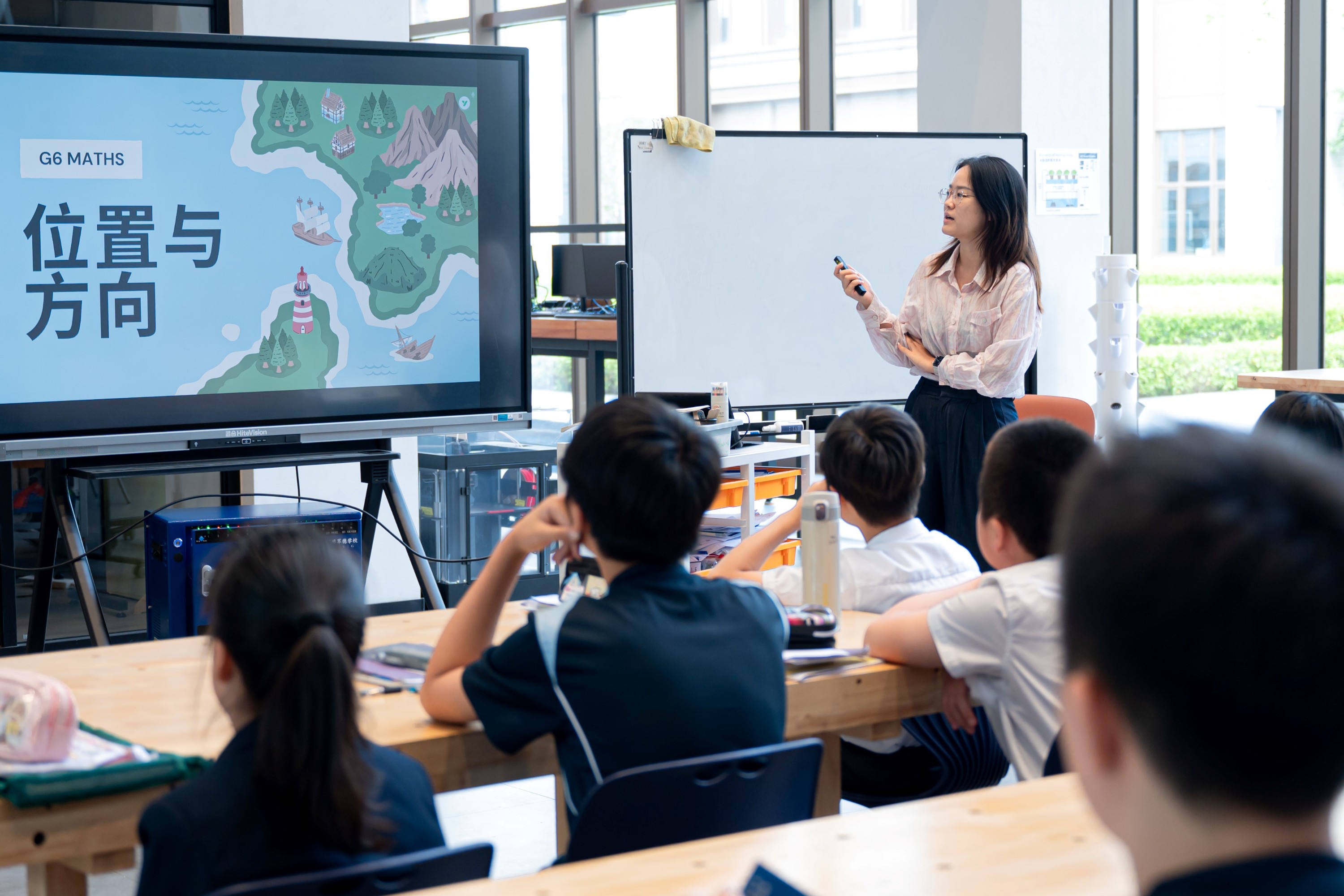
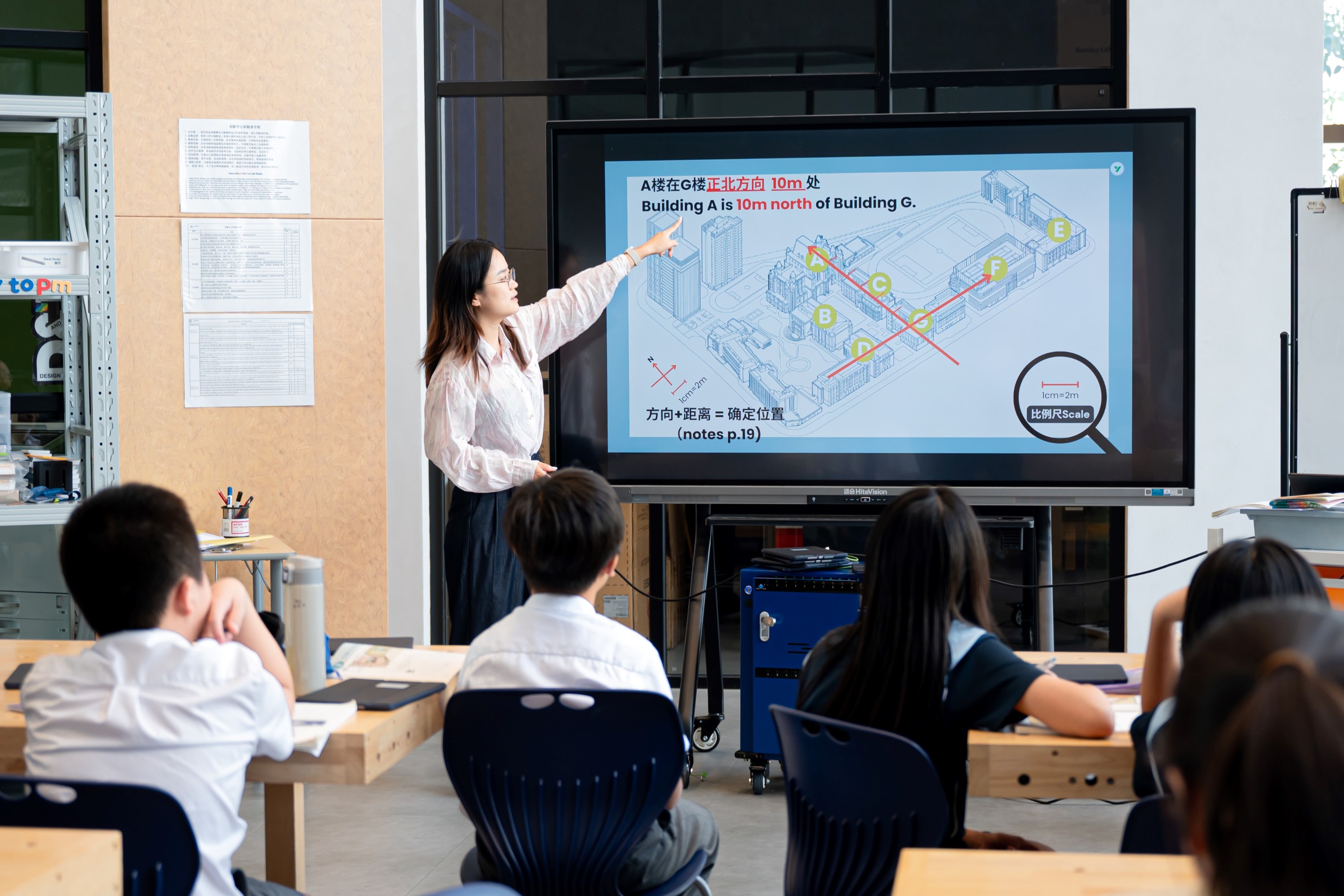
Instead of traditional textbook exercises, Ms. Sia Huang used the BBSG campus map as a learning tool for her Maths lesson. Familiar landmarks - academic buildings, sports hall, cafeteria, and main building - have now become real-world reference points:
-
Building A is 10 meters north of Building G.
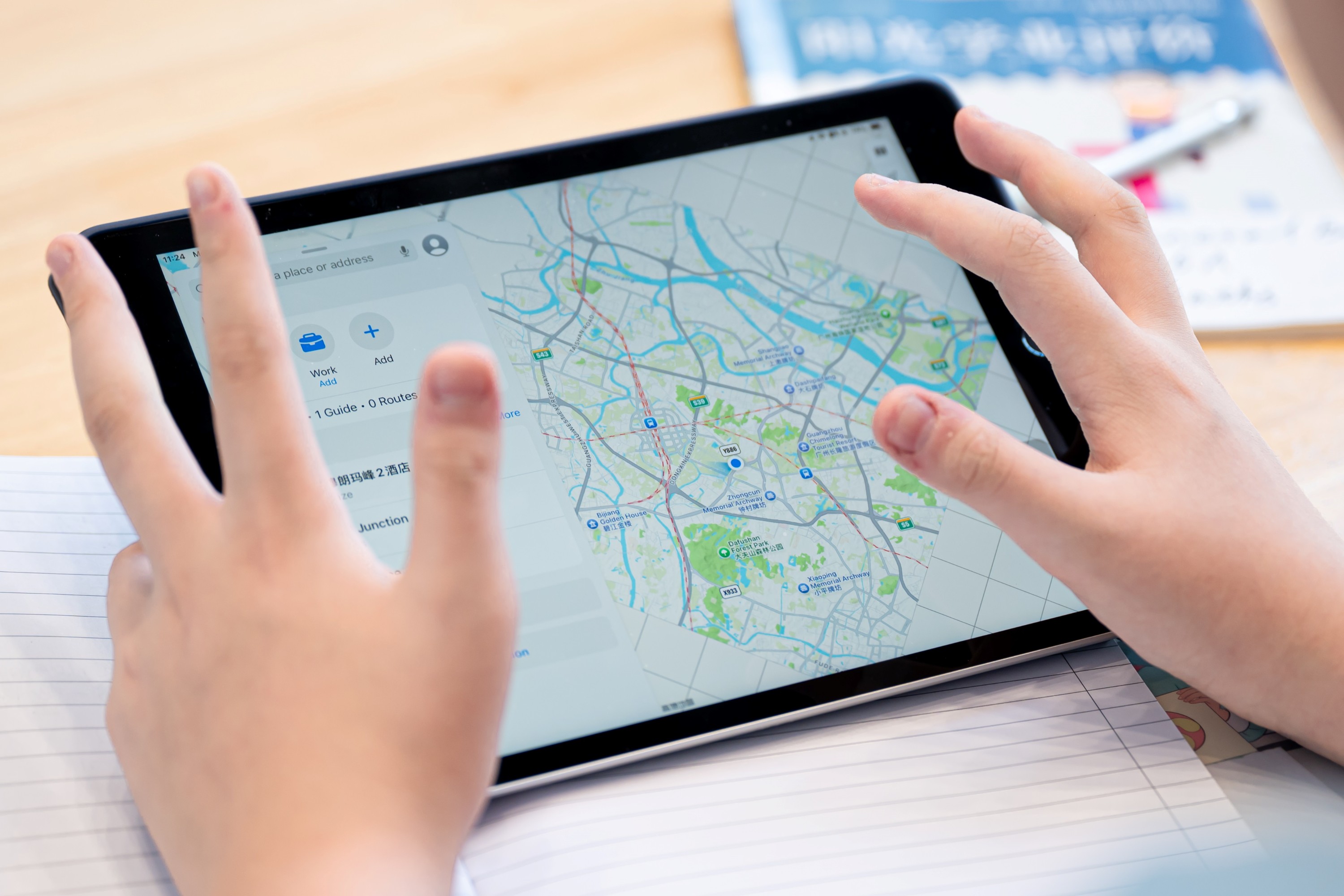
Following BBSG's bilingual Maths approach, they gradually mastered directional and angular descriptions in both languages, progressing to express complex positional relationships:
C is 4 meters at 60° East of North from D
Y is 6 meters at 45° Northwest from
Building G
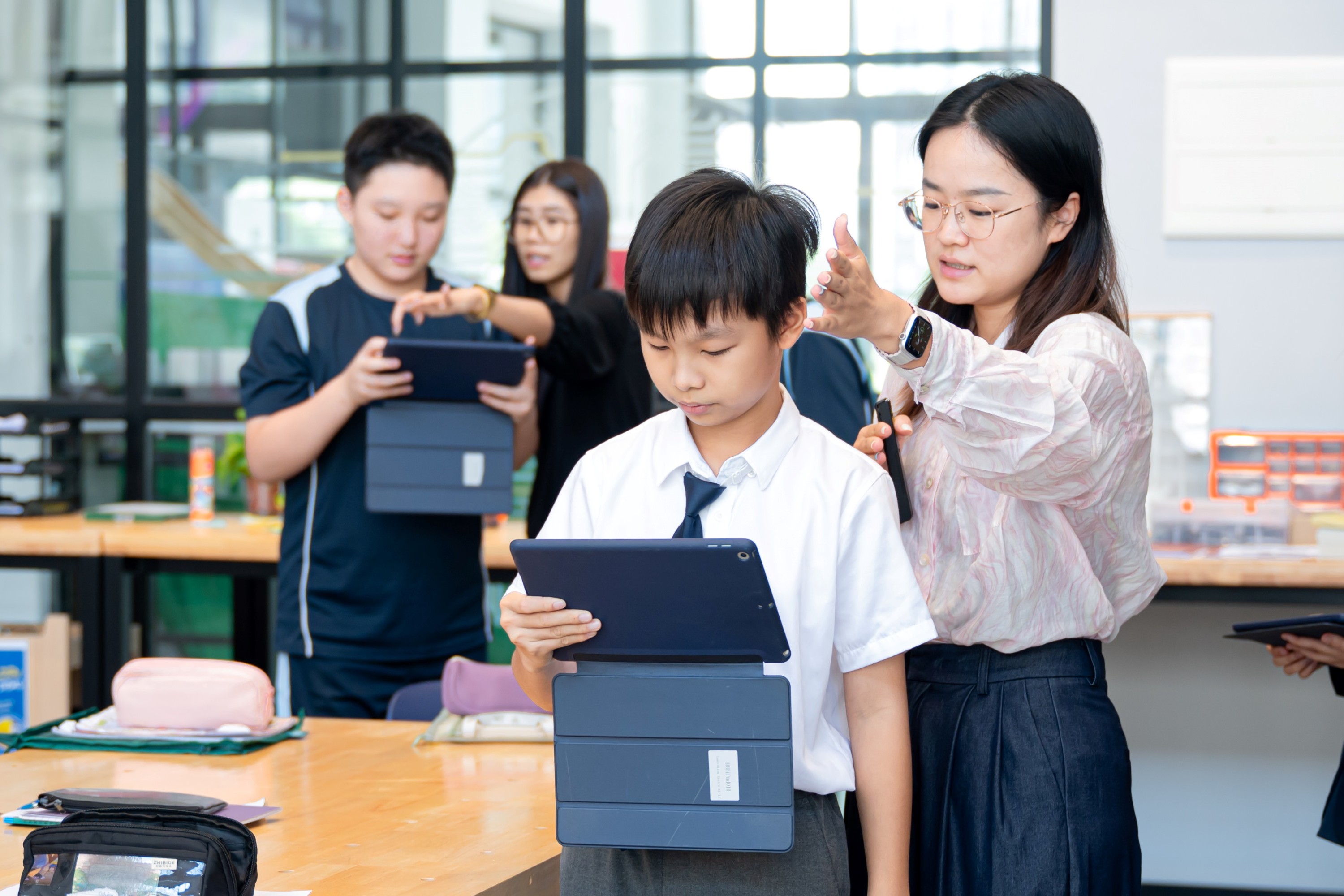
This cross-linguistic mathematical expression helps students prepare for international curricula while understanding Maths as a key tool for spatial description, pattern recognition, and scientific thinking.
—— Ms. Sia Huang,
BBSG Maths Teacher
The Maths lesson aimed beyond teaching direction and distance - it went further to guide students in understanding the three key concepts of positioning systems:
Direction + Distance = Position
It was a fun and engaging project, it also reminded me of geography concepts like directions and map reading.
—— Ray L, G6
The Maths lesson gave students a mathematical model they could further apply to solve real-world problems. In subsequent STEAM lessons, they would use this model to design tools for their next challenge.
STEAM:The Third Language of Mathematical Expression
The Maths lesson concluded with students creating their own challenges—hiding "treasures" across the campus using coordinate positions. They then moved on to STEAM lessons, where they programmed digital compasses to track these treasures, turning mathematical concepts into an exciting treasure hunt focused on speed and accuracy.
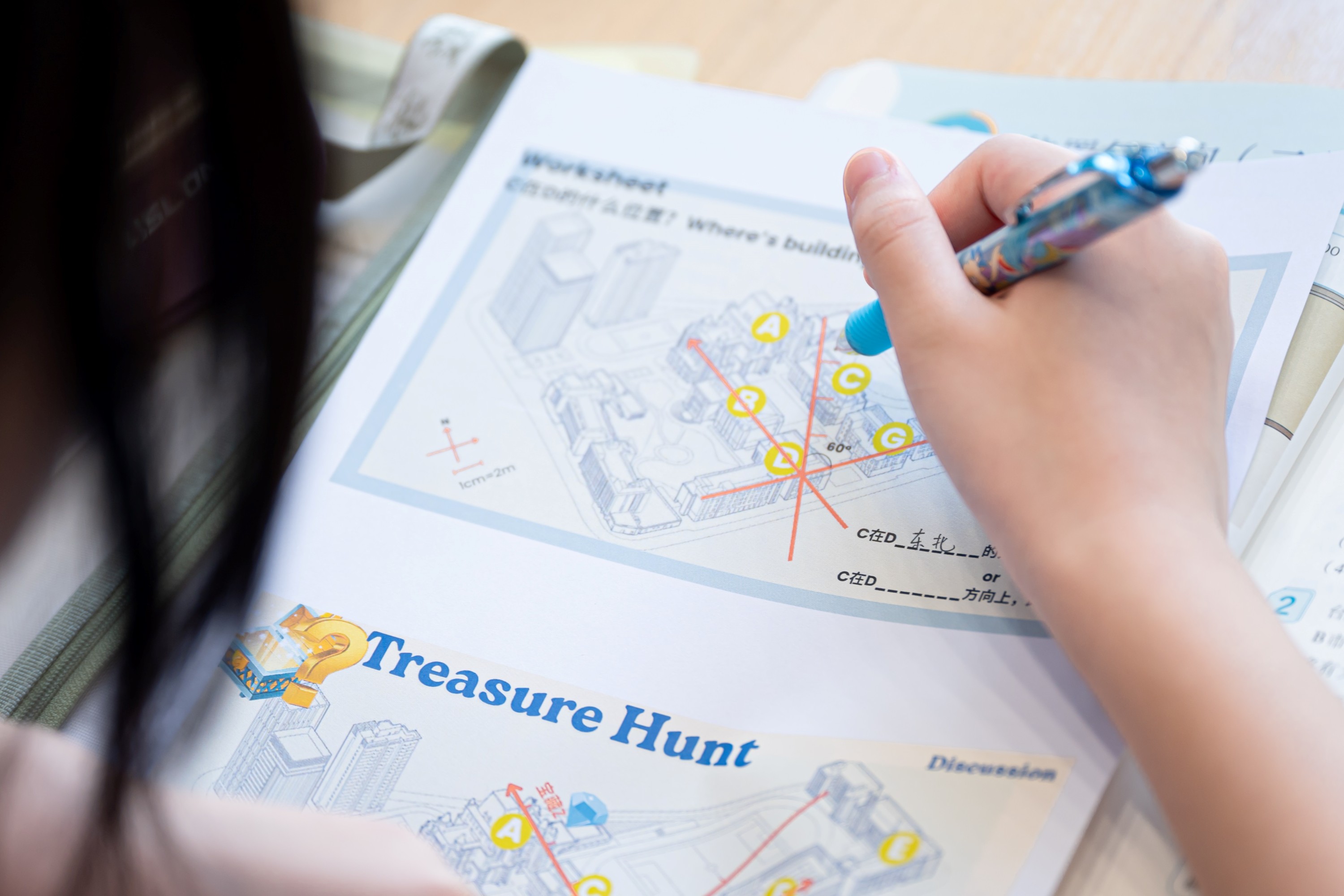
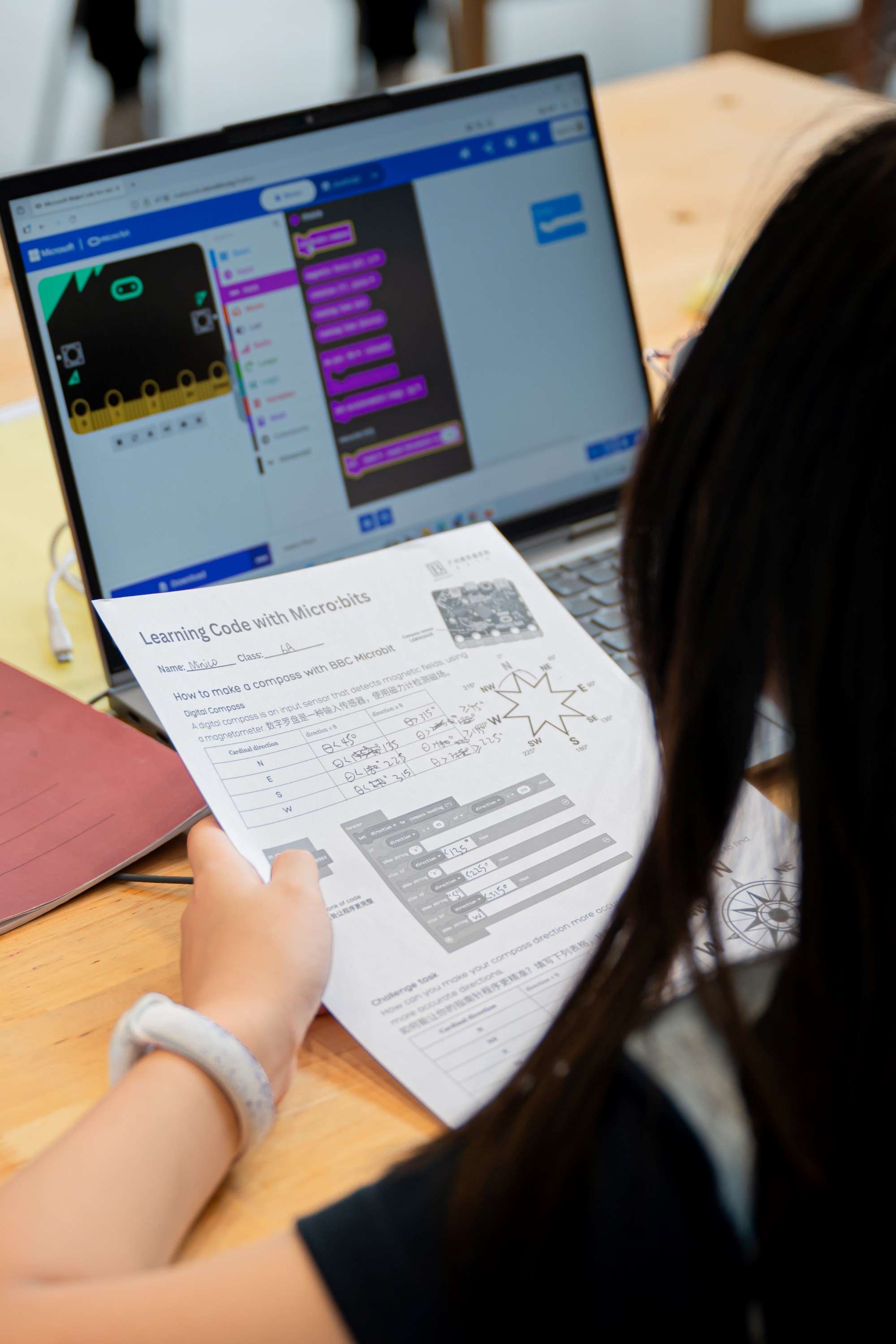
To make a digital compass, students first needed to understand how a compass works. Under Ms. Kivi Liang's guidance, they explored Earth's magnetic field, learned how sensors detect magnetic signals, and started programming their own devices to locate the "treasures".
This was our first time using Micro:bit programming on computers. It's more challenging than Scratch, which we used before - we had to get the directional data exactly right, otherwise we couldn't find the treasure.
—— Jason W, G6
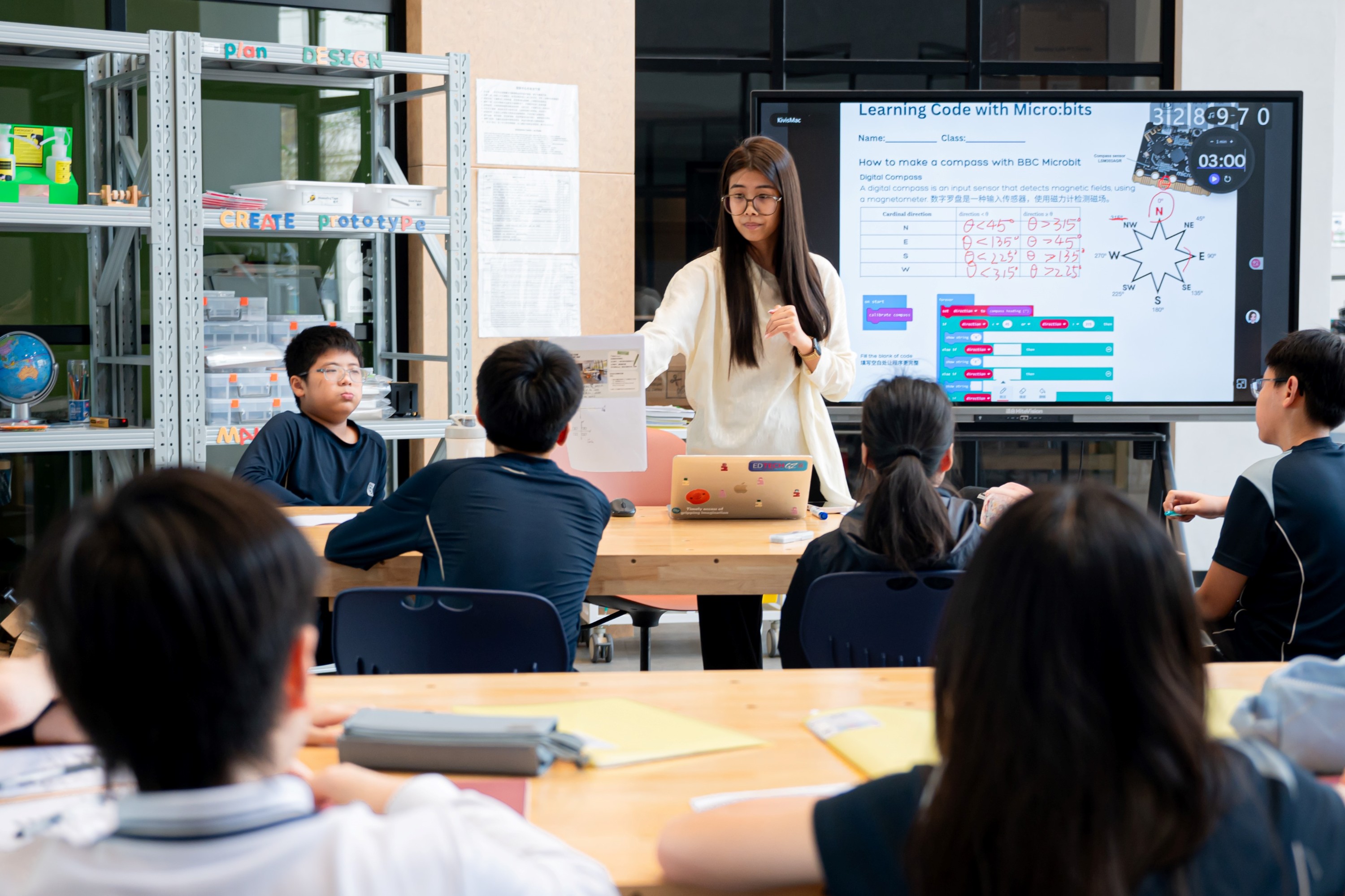
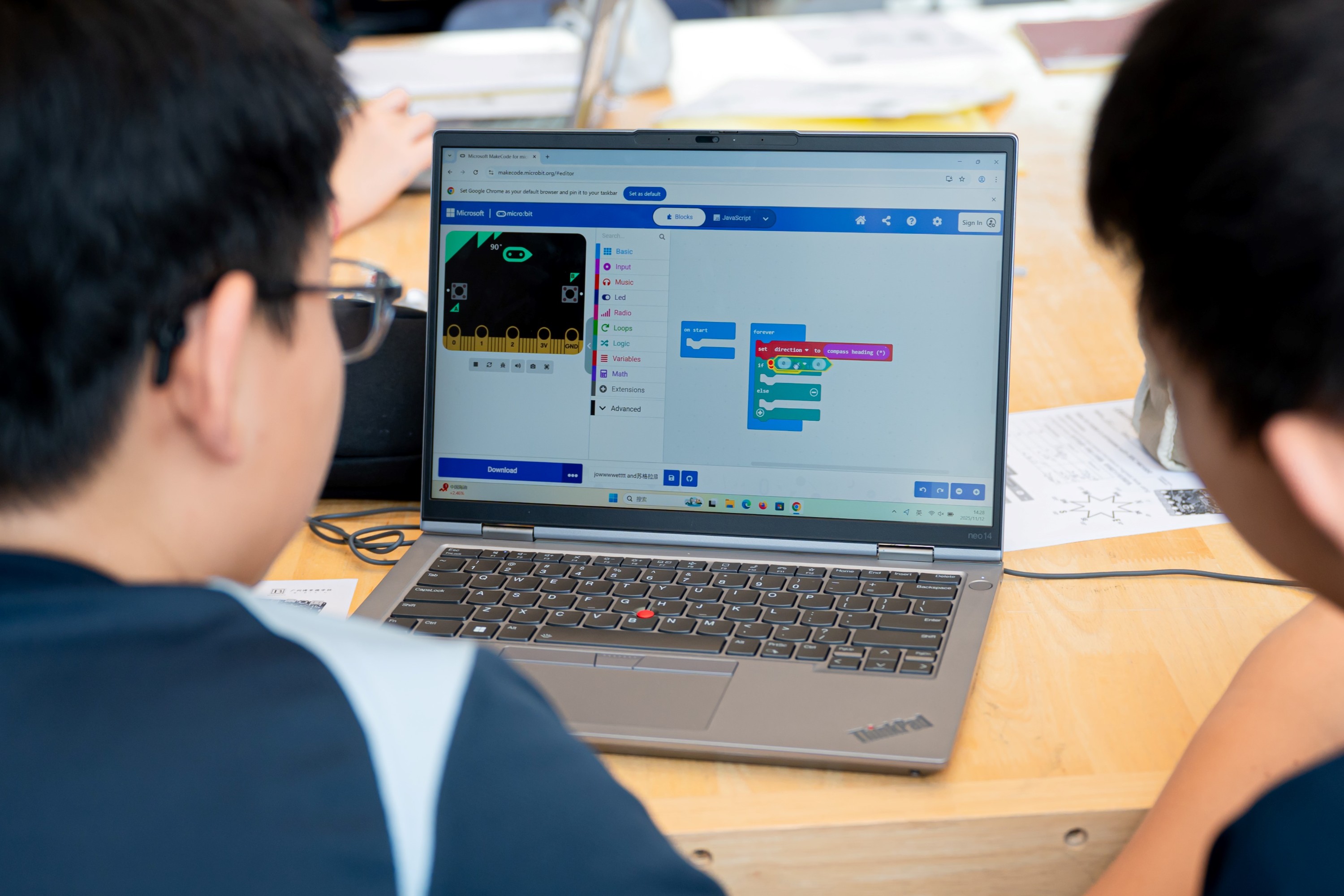
Students worked in groups, cross-referencing treasure maps, verifying data, and debugging their programmes. The classroom activity transformed into an active, campus-wide treasure hunt, bringing mathematical concepts to life.
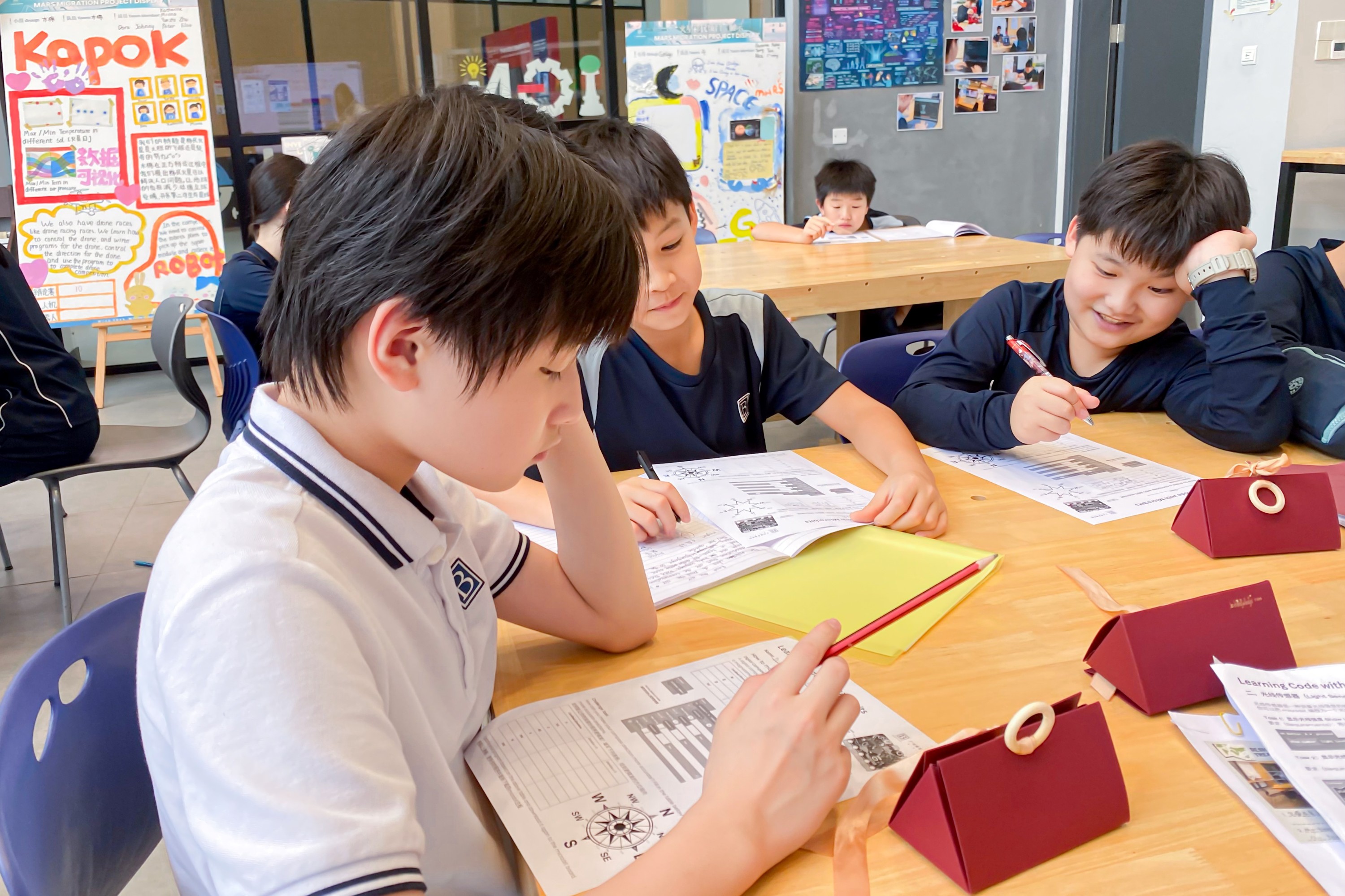
One of the students managed to find four "treasure" boxes (red ones in the photo)
At BBSG, the STEAM curriculum integrates computational thinking and programming fundamentals. Students progress from Micro:bit visual programming to text-based languages like Python and C++, eventually mastering advanced hardware like Arduino and Raspberry Pi for comprehensive STEAM projects.
—— Ms. Kivi Lang,
BBSG STEAM Teacher
Teachers observed students engaging with focused energy - discussing ideas, designing maps, checking directions, and ensuring accurate data for precise positioning.
This project creates a deep connection between the concept of “Physical Positioning” in Maths and “Algorithmic Navigation” in STEAM. What’s truly ingenious about it is that it doesn’t simply combine subjects around the superficial theme of “Treasure Hunt.” Instead, it is guided by two transferable big ideas: System and Model.
In Maths lessons, students developed an abstract model of “Direction + Distance = Position,” which they then transformed into an executable algorithm during STEAM lessons. This design allows students to operate at a higher conceptual level, enabling knowledge and skills to transfer seamlessly. As a result, they gain the ability to tackle unfamiliar problems in the future. This capacity - along with the way of thinking it cultivates - is the real “treasure” they take away from the project.