
Student Innovation: AI For Elders
30 Oct 2025
At a crucial technological crossroads, BBSG students are tackling an important social challenge: making AI accessible to China's 300 million elderly citizens.
This week, BBSG hosted Mr. Min TANG, former Counsellor of the State Council and founder of the "AI for Elders" initiative, along with Prof. Xiaolei ZUO from Shenzhen X-Institute. They brought this university-level research to Primary and Junior Secondary students in Guangzhou for the first time.

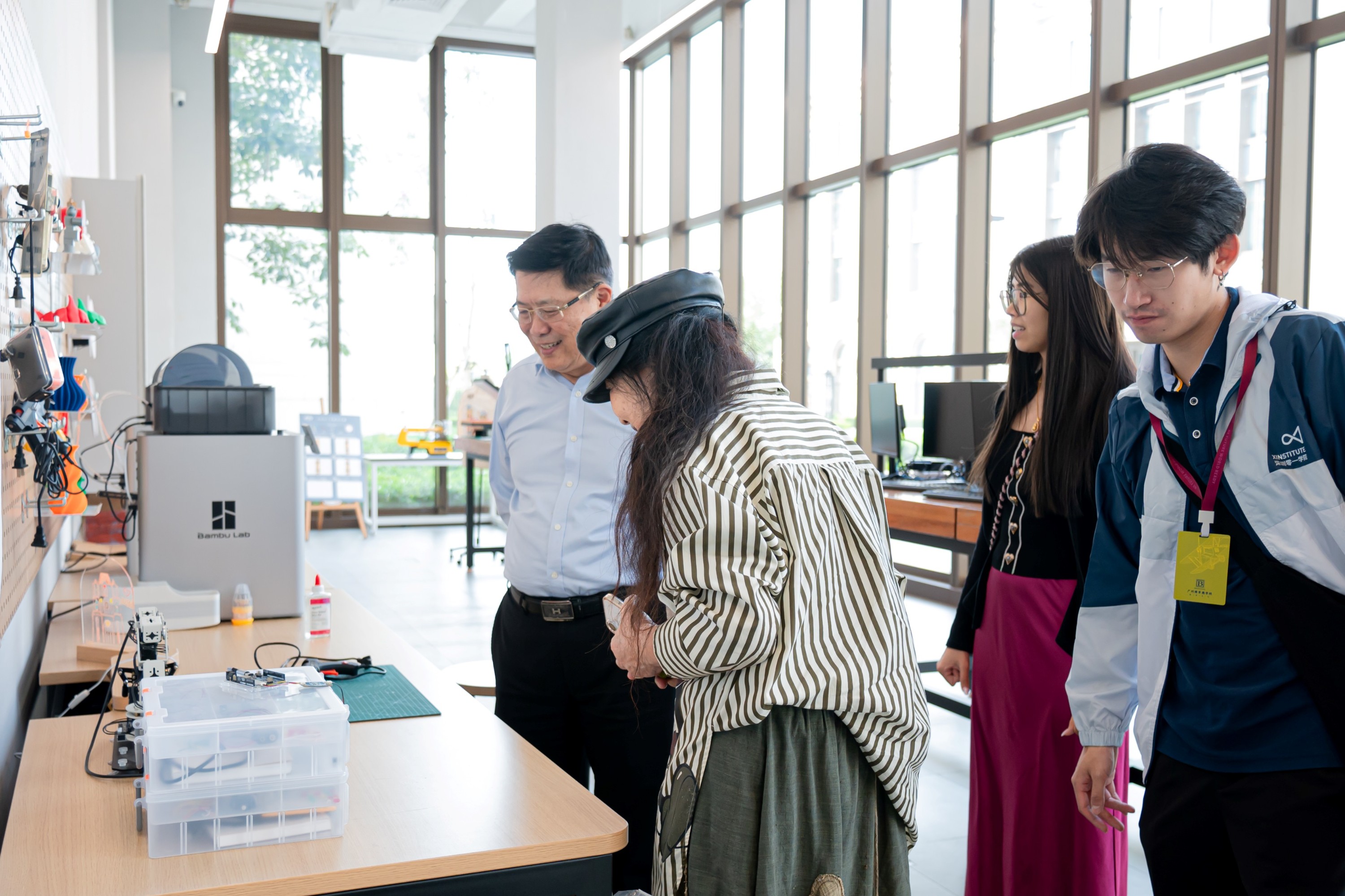
Mr. Tang and Prof. Zuo visiting BBSG
Research
At the start of this Academic Year, BBSG introduced the "AI for Elders" project to Primary and Junior Secondary students as part of our Enrichment Programmes. Working in teams under expert guidance, students learn AI skills while developing practical solutions to support their grandparents' wellbeing. It's where technology meets family care - turning classroom learning into real-world impact.

Students began their journey using empathy mapping to identify key challenges in elders' daily lives.
To ensure their solutions address genuine needs, BBSG is arranging student visits to local elderly care homes. Meanwhile, BBSG Innovation Centre teachers Ms. Kivi Liang and Mr. Johnny Guo developed an "Elderly Scenario AI Simulator," allowing students to practice interactions through AI-simulated conversations with seniors - a creative approach combining technological innovation with empathetic design.
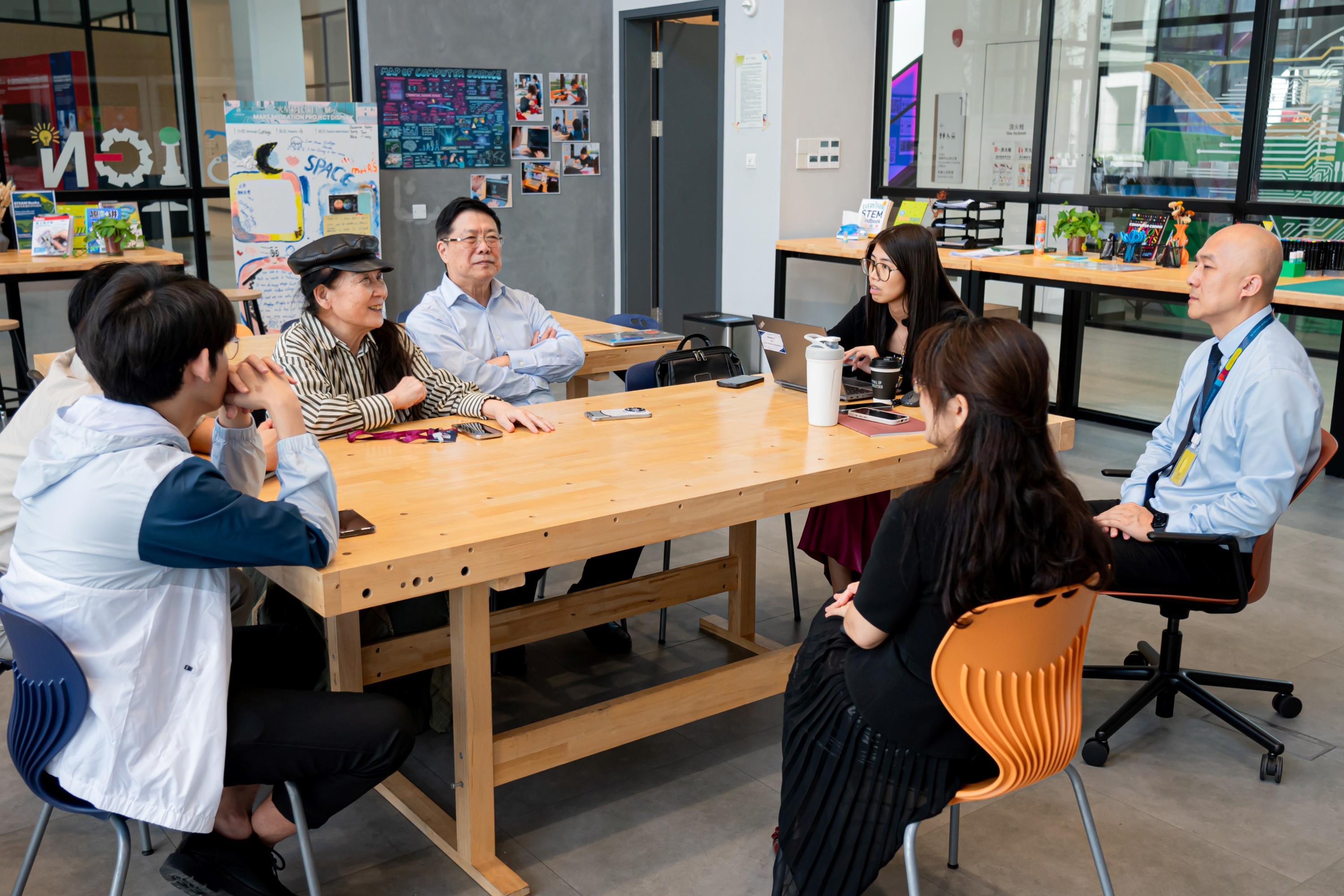
Discussions between BBSG STEAM team and visiting guests
After thorough research, each team refined their focus and began developing creative solutions

Joyce X (G5), Coco Z (G5) and Coco Z (G4) investigated how pets can improve elderly emotional well-being
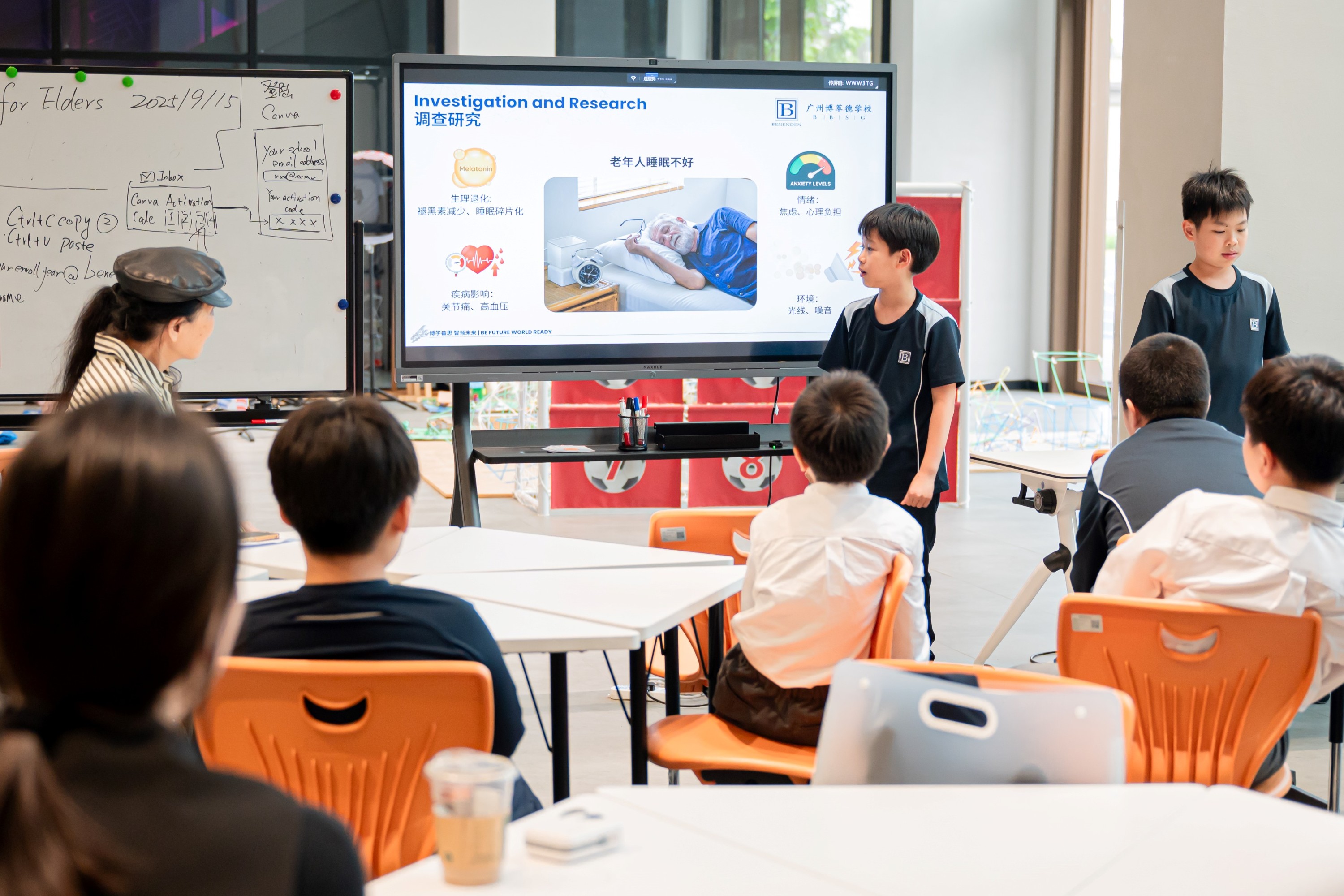
Alexander S (G5) and Summer F (G5) focused on improving sleep quality for elders
Ideas
During an engaging project showcase, BBSG students presented their ideas addressing elderly well-being, including the "Vitality Assistant," "Pet Care Reminder," and "Track Robot." Their thoughtful approaches impressed the visitors.
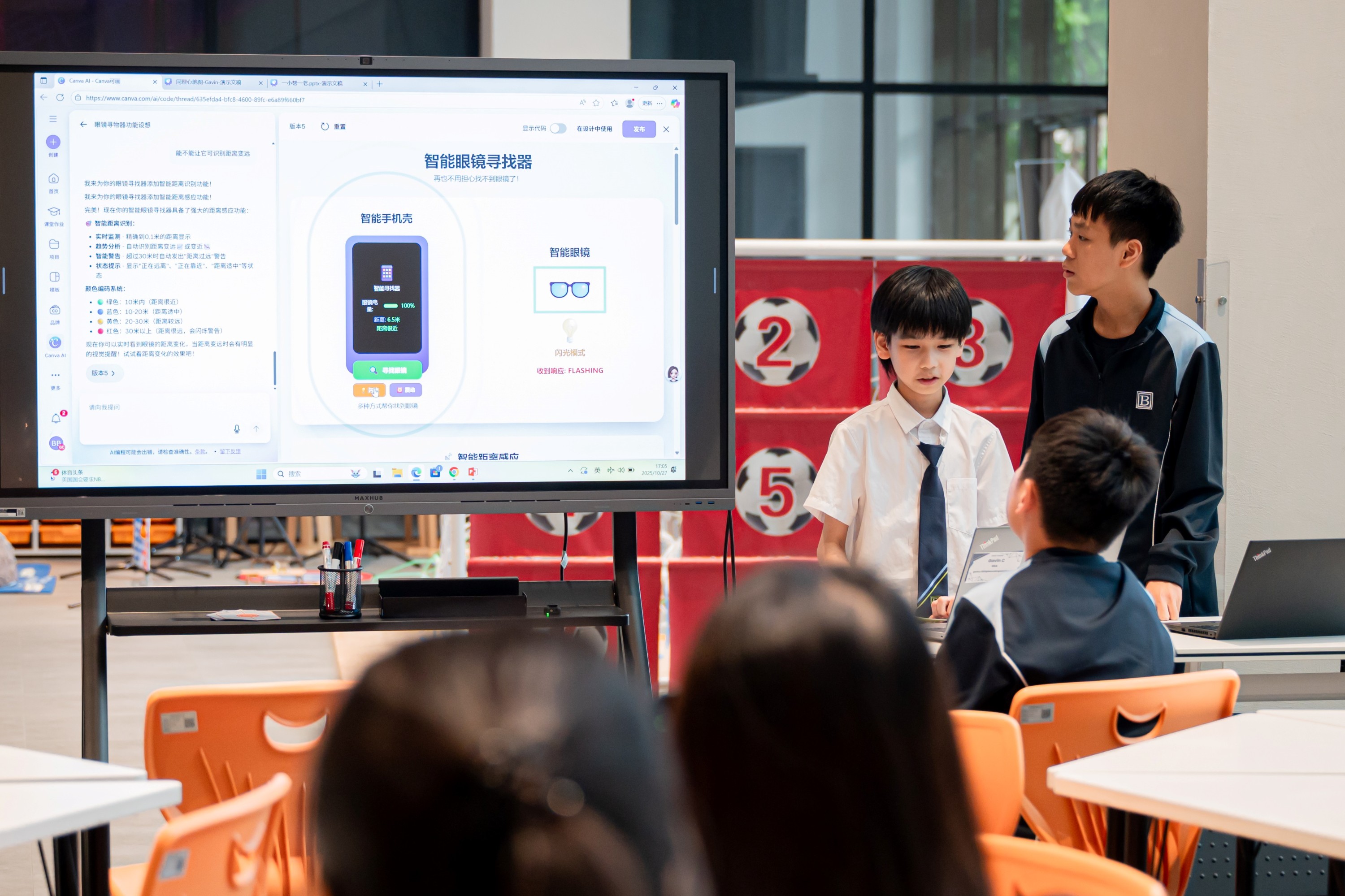
Gavin C (G6) and Constant H (G7) presented the idea of smart glasses

Ethan L (G5) developed "Xiao'an," a companion robot for elderly living alone
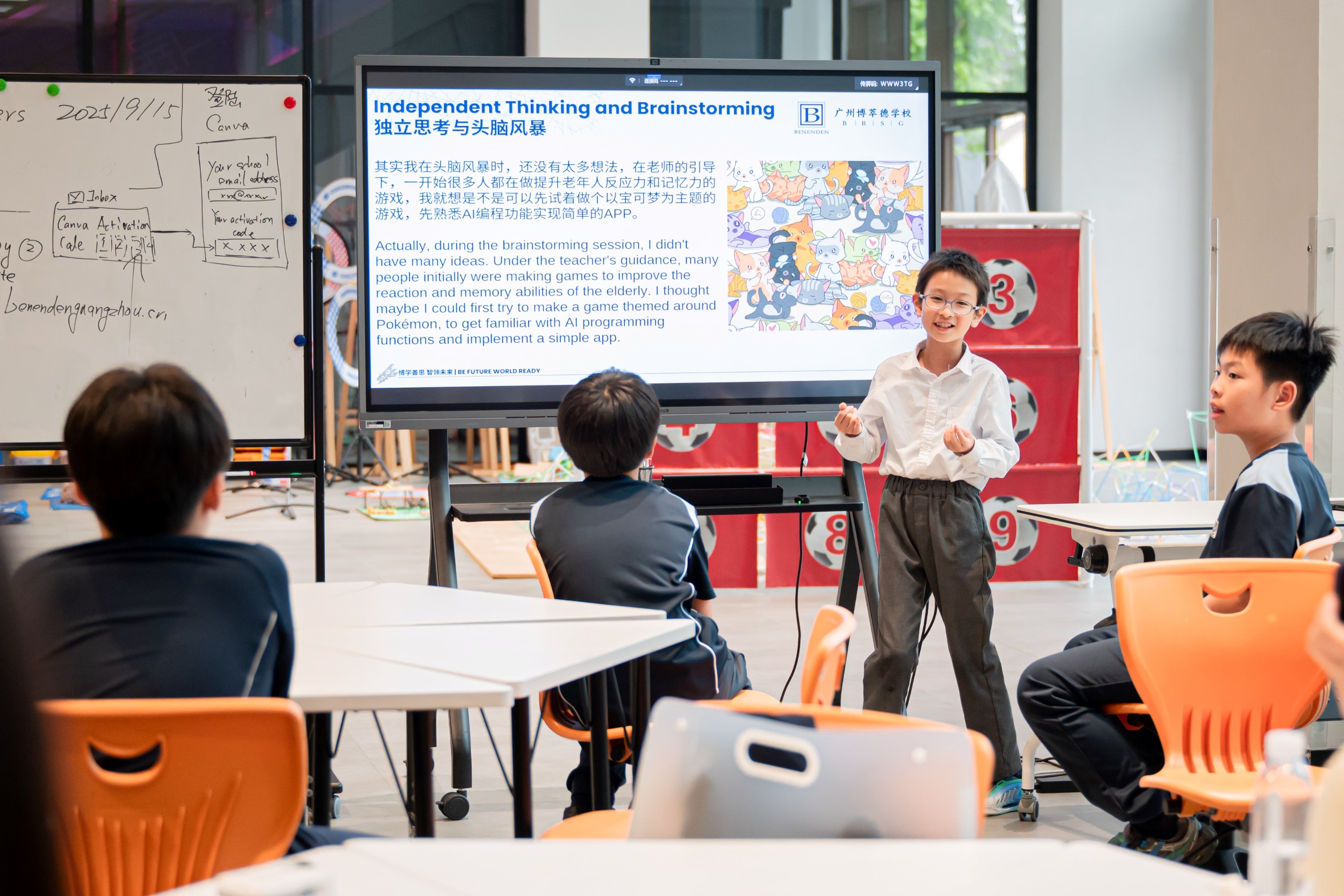
Aiden Z (G5) shared his journey of learning AI programming through game design
Prototype and Test
Teams then moved into prototyping their products and applications, using the "Minimum Viable Product" approach to test and iterate their designs.
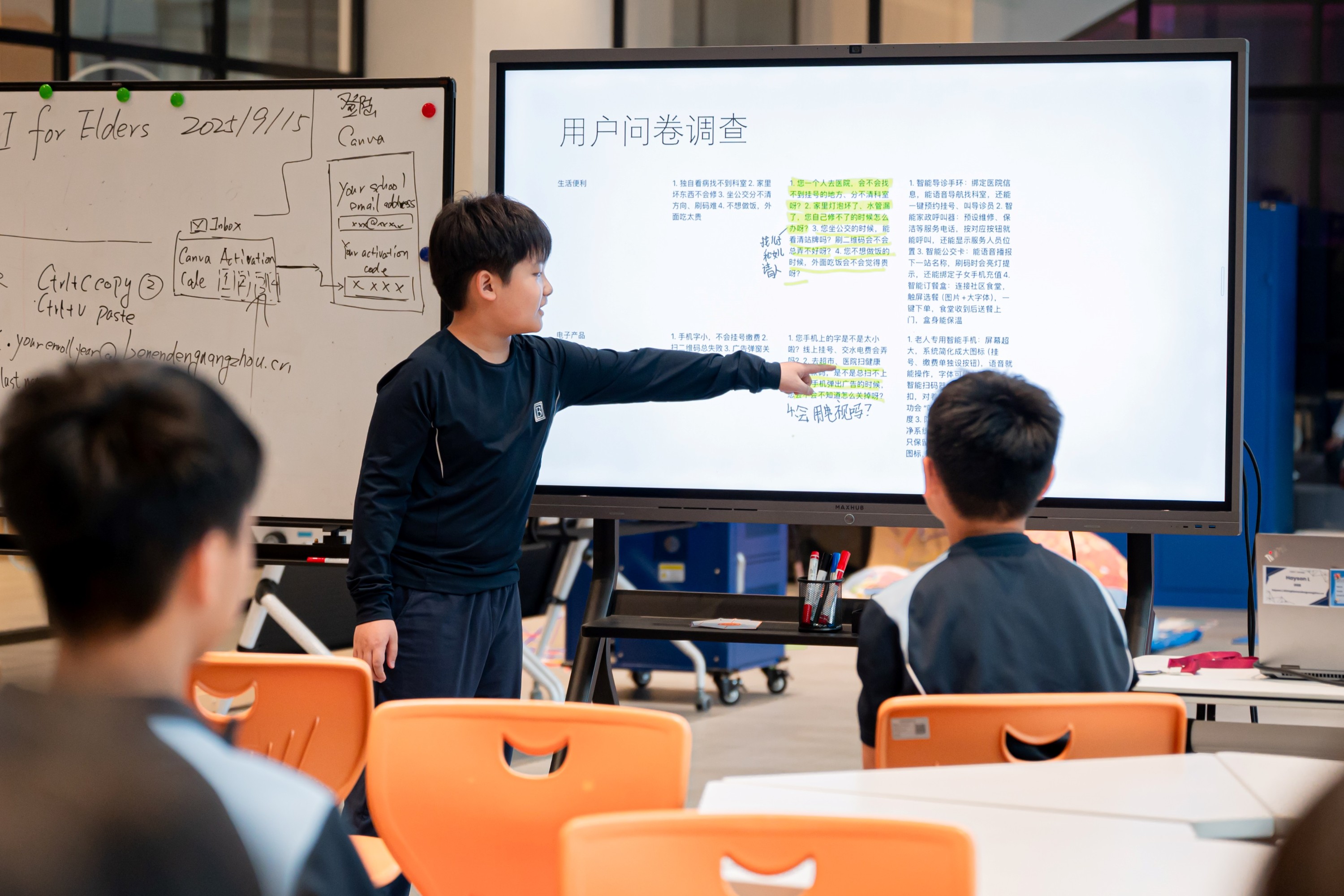
Hansen F (G6) conducted a detailed user feedback analysis to ensure design alignment with actual needs
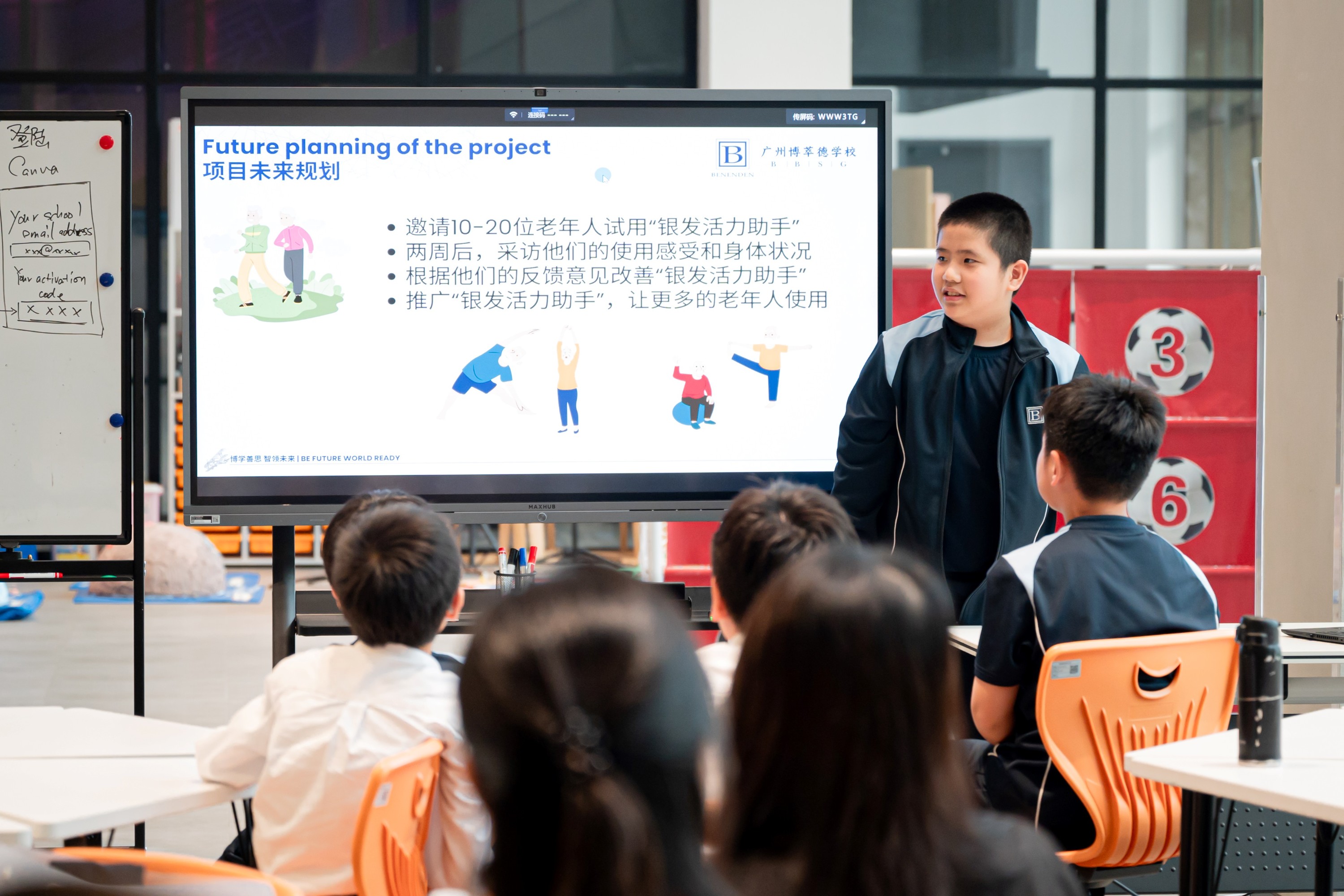
Reid Z (G5) planned small-scale user testing with users for further product refinement
This project is an example of the BBSG Signature Programme "AI for Humanity." The human-centred approach to AI technology, inspired by Stanford University's design thinking methodology (now widely adopted in various industries), also gave students hands-on experience in product development from concept to completion.

Image from Tsinghua University
This project's impact extends far beyond technical skills. When students use AI to solve real problems in their community, they experience both the satisfaction of learning and the joy of helping others. This inspires them to tackle broader social challenges and motivate their peers, truly developing into future leaders with innovation capabilities.
- Mr. Min TANG
This winter, BBSG students will present their innovations at a specialised competition, sharing their vision of technology for social good with contestants nationwide. Meanwhile, our Innovation Centre is collaborating with institutions like X-institution in Shenzhen to explore manufacturing possibilities for these student-designed products, bringing their ideas to life for the benefit of the elderly community.