Immersive English Environment at BKG
27 Nov 2025
At BKG, "Immersive English" is not an abstract educational label—it is embedded in every detail of a child’s daily life in kindergarten:
In the classroom: International teachers facilitate learning throughout the day, through interdisciplinary thematic inquiry, dedicated sessions for language and early literacy development, a well-established phonics and leveled reading system, and art, music, drama, and PE classes.
In KG every moment is a teaching and learning moment, daily life learning is given equal emphasis. English interactions take place during meals, guide children when lining up, and English is a core feature of environmental print around the classroom. Morning greetings, nap-time transitions, and after-school goodbyes all serve as opportunities for language immersion. Every moment is a learning moment. We are learning from the second we arrive, to the second we leave. At BKG we stretch thinking about what constitutes learning, steering perceptions away from the learning is the 'teacher talks, children listen' approach, to a fully interactive and immersive day, every day.

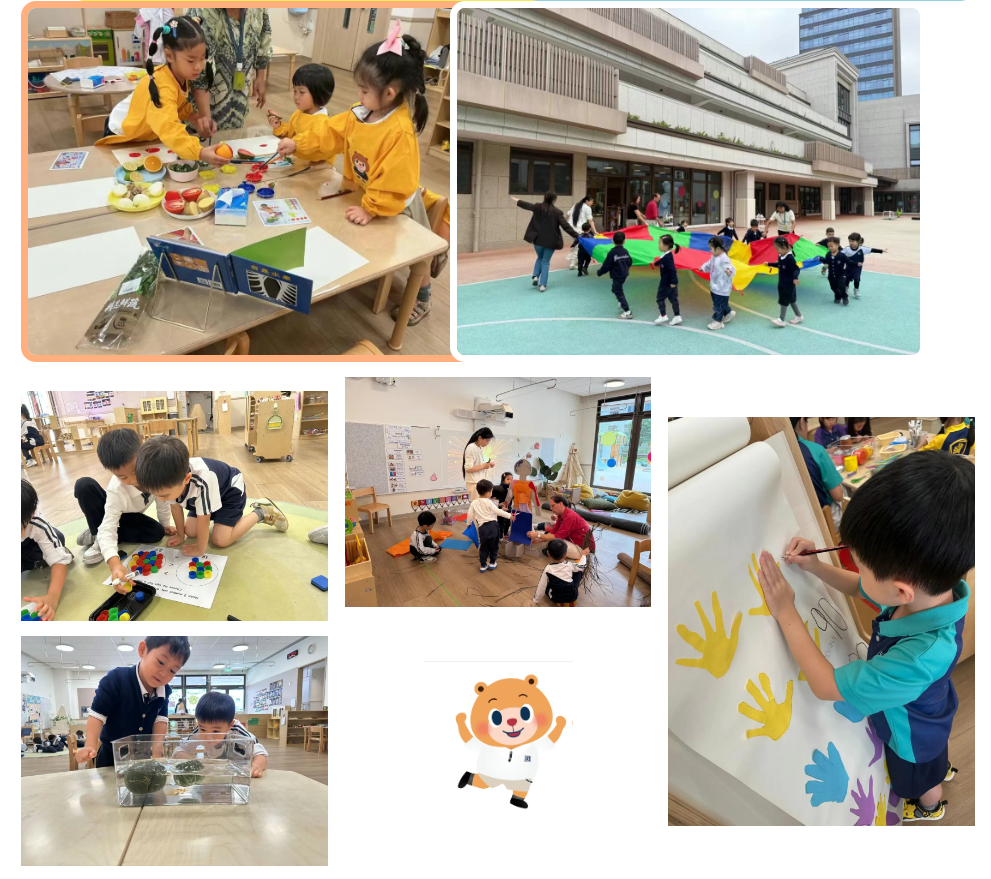
Our teaching team, has crafted a rich and vibrant English environment combining these two dimensions: "teaching and learning activities + daily life and care." This allows children to be fully immersed in authentic language input and output, ultimately following the natural process of first-language acquisition to meaningfully develop listening, speaking, reading, writing, and comprehension skills in their additional language.
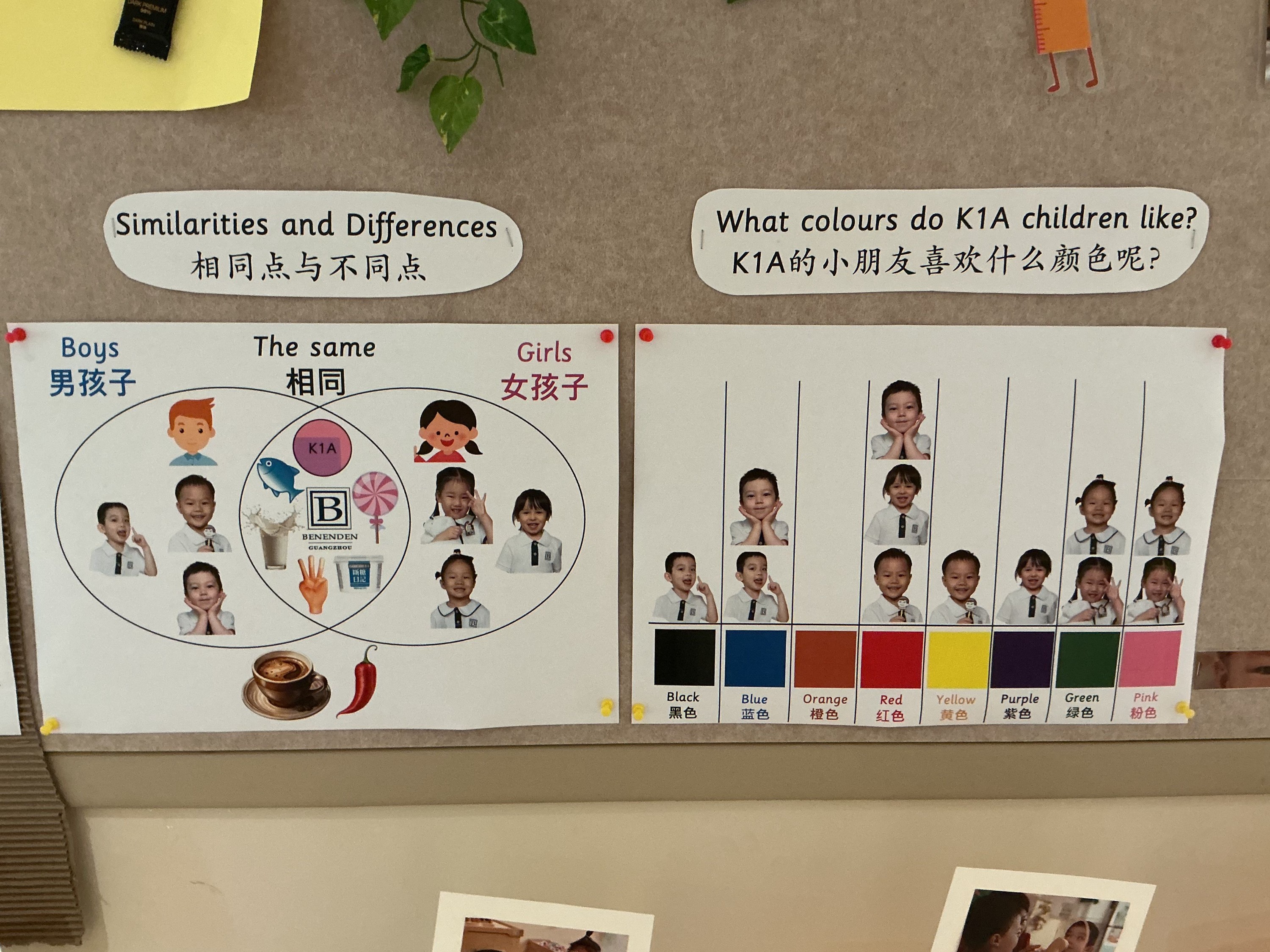
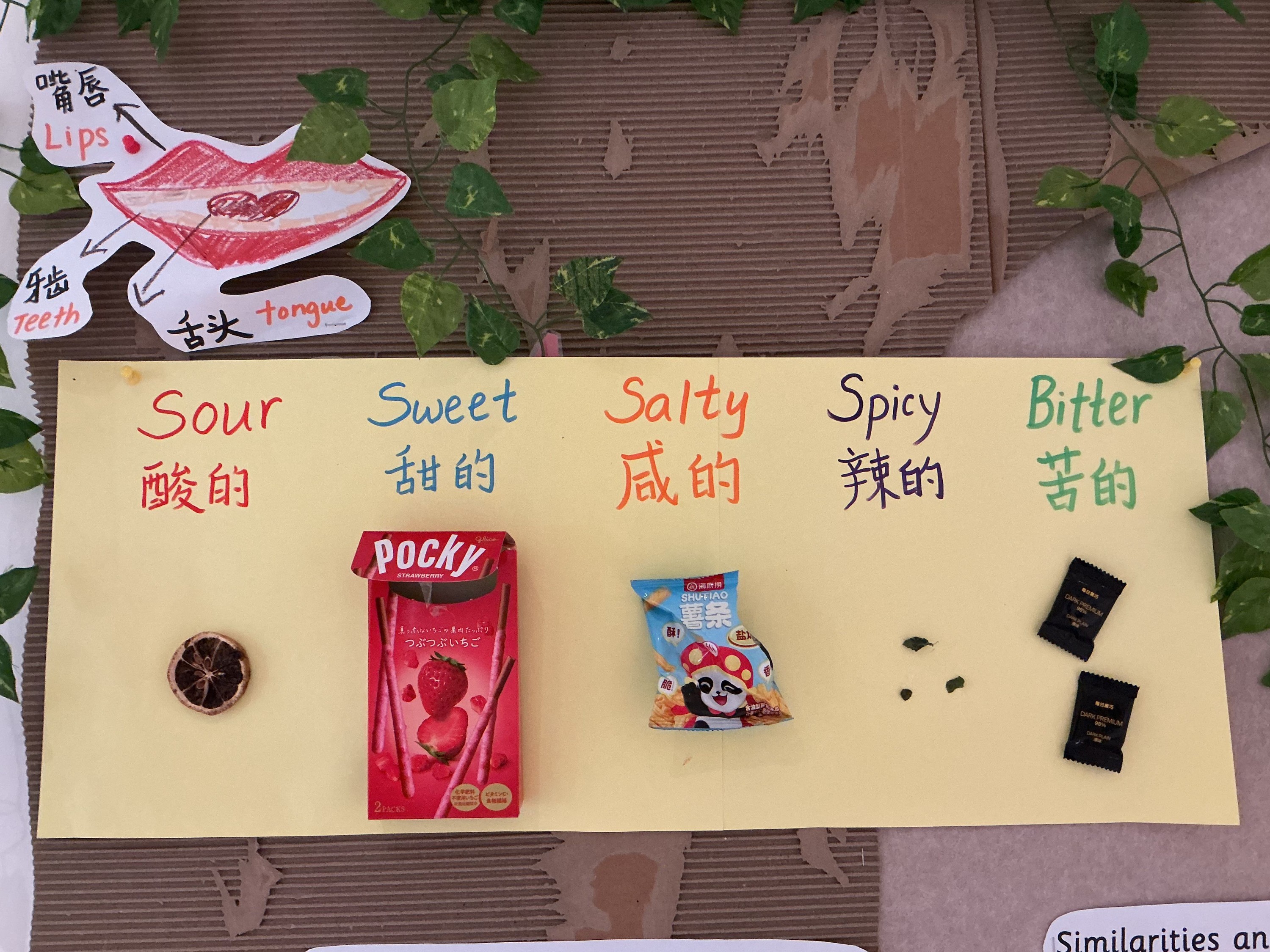
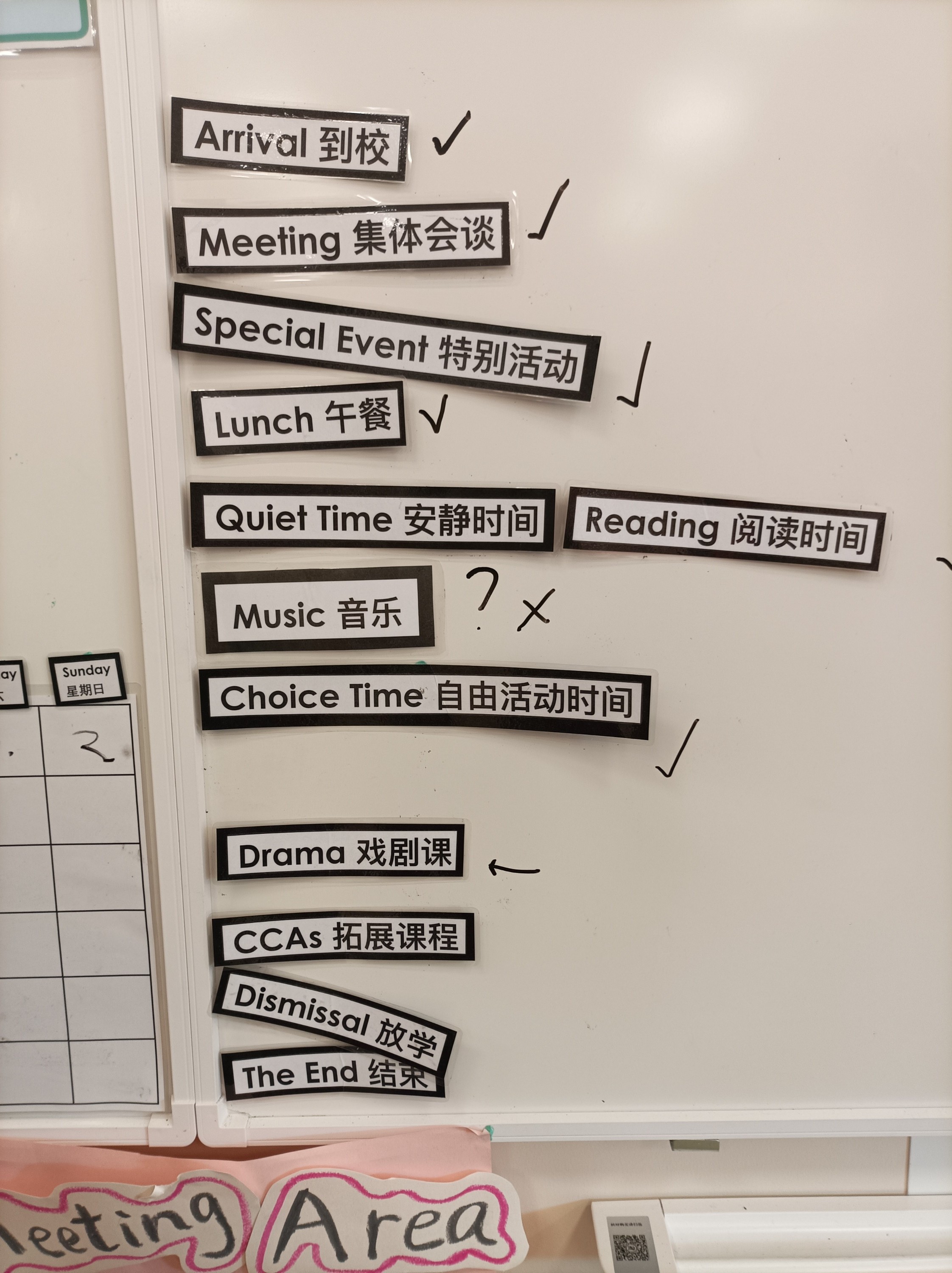
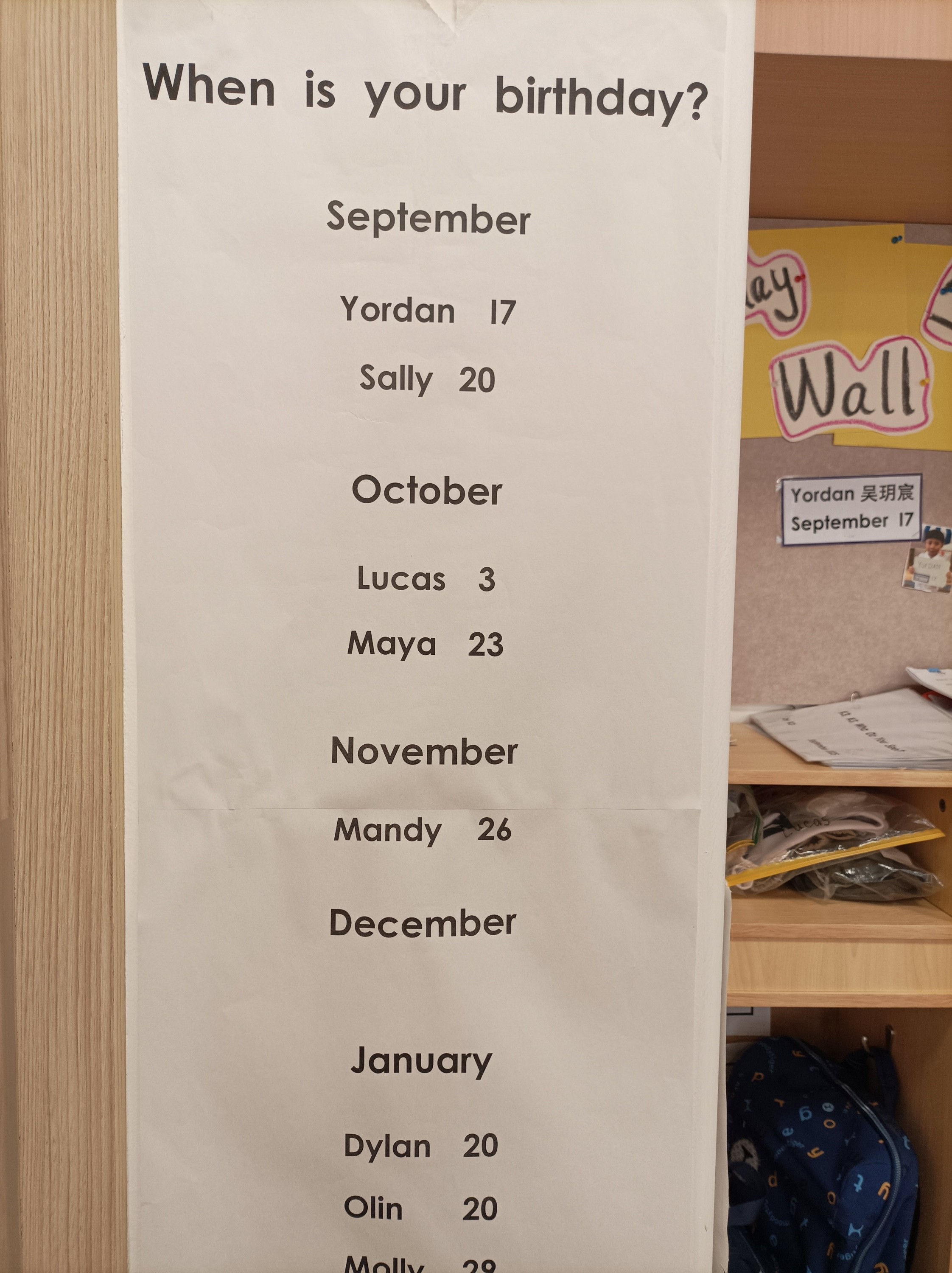
Amy, Head of BKG, says, "Children at BKG enter a holistic learning state as soon as they arrive—there is no clear distinction between ‘in-class’ and ‘out-of-class’ time, and they are immersed in English throughout the day. The whole day constitutes a ‘lesson’ in KG. We integrate English acquisition into every moment of a child's time at the kindergarten, with a particular focus on real-life scenarios for English use. We believe that for young children, English serve and return conversations, in daily contexts are more effective than one-way classroom instruction. When we use this approach, English is a living language, it is tangible to children, and enables them to use it meaningfully."
Even meal times are thoughtfully designed for language acquisition. Every day during lunch for K2, Ms. Wu Hailing—the deputy head of BKG and K2 Chinese Bilingual Teacher, takes responsibility for serving food —engages children in English-only interactive communication: "Would you like some broccoli? Do you want a lot or a little?"
Ms. Wu explains that the daily changing menu serves as the perfect vehicle for contextual teaching of food-related vocabulary: "Would you like broccoli? How about some beef?" "Are you full? Would you like more winter melon and meat soup?" It is a great way to practice English, and develop our personal, social and health development skills at the same time.
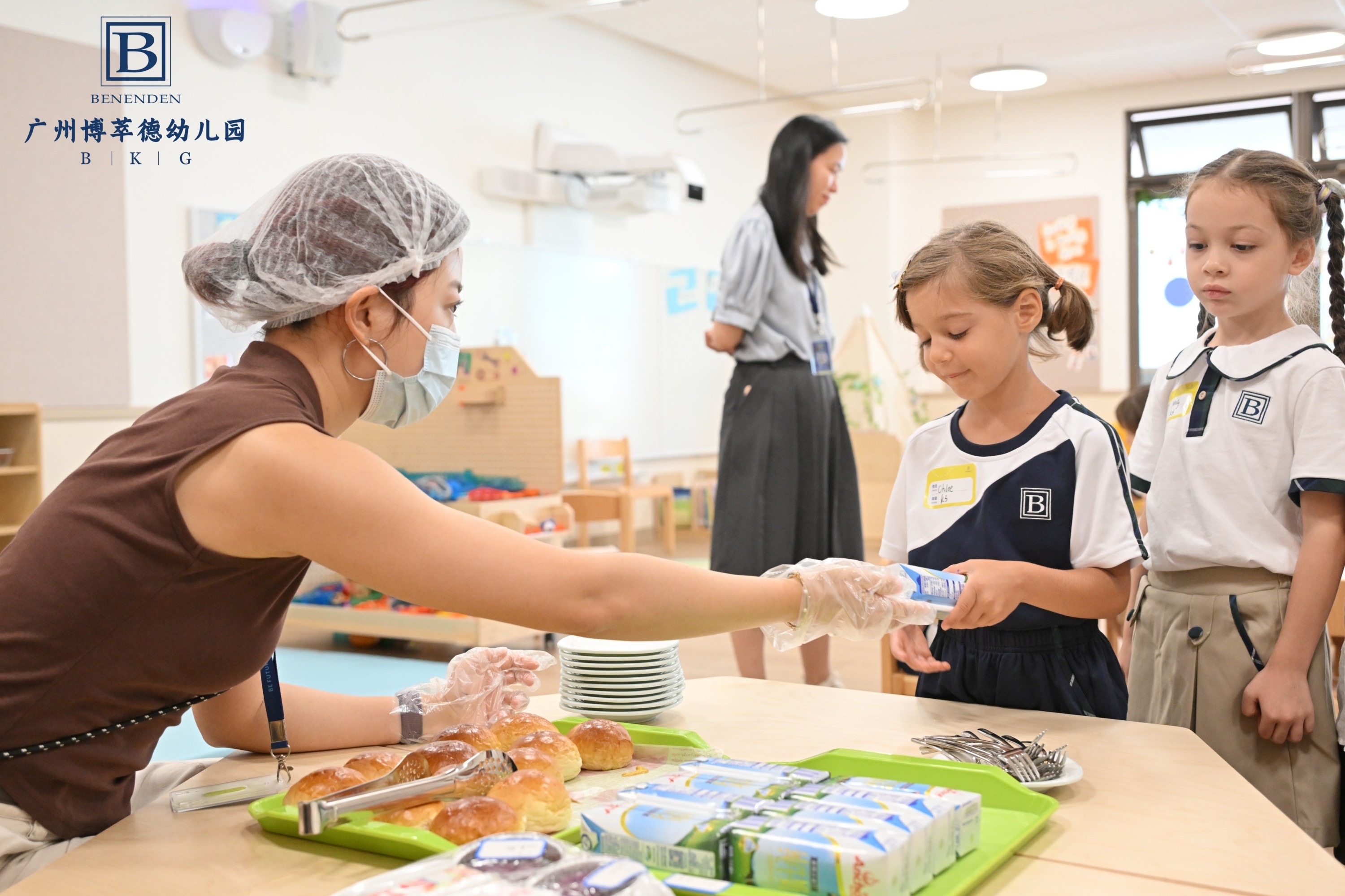
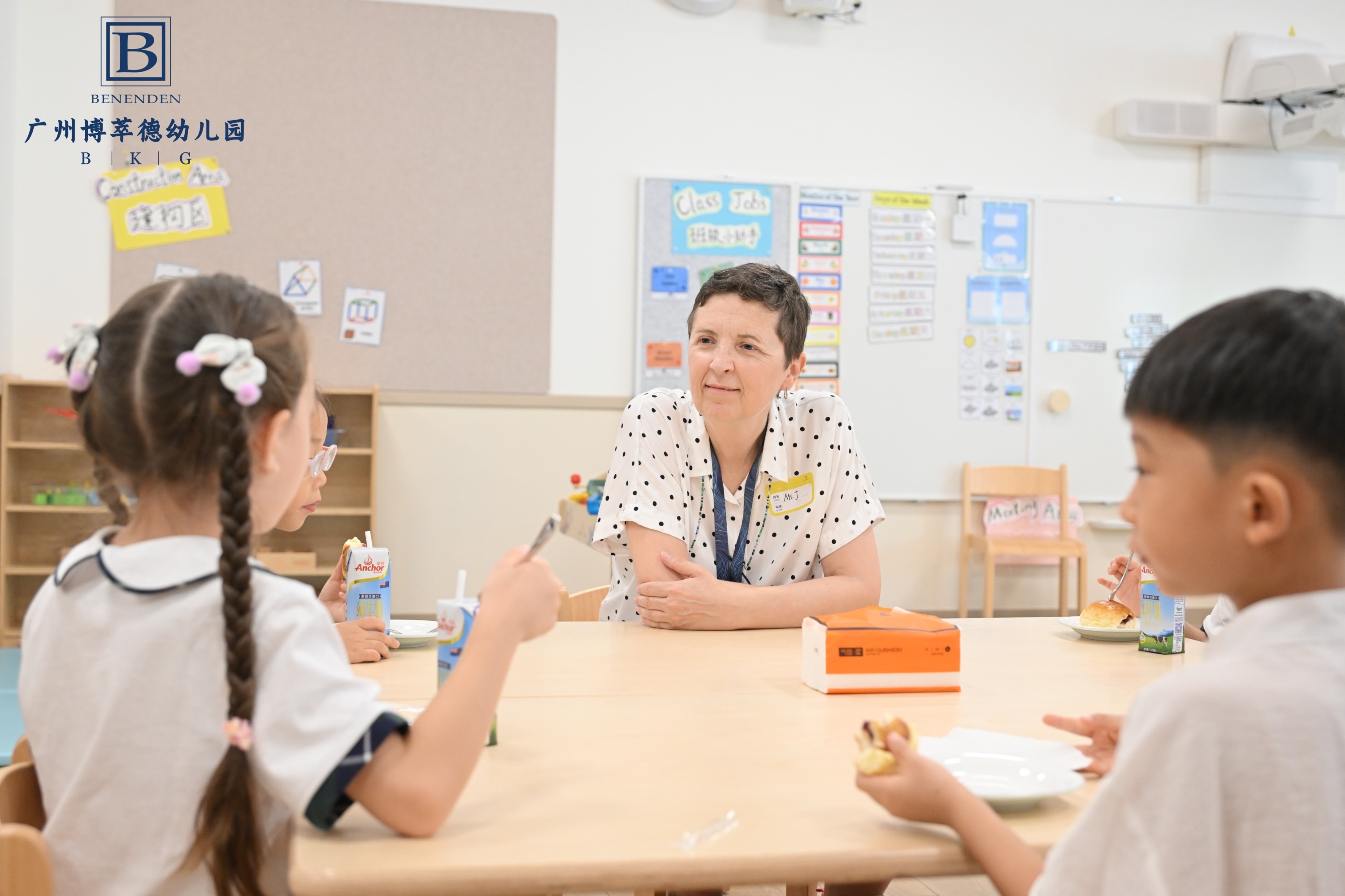
In the early stages, some children may not fully understand the vocabulary. However, with the help of activities and objects that underpin every communication even our youngest learners are able to communicate confidently during meals. With repeated and supportive exposure, children naturally internalize vocabulary like "broccoli" and "beef" in context. Communications are developed as children's ability grows, adding more complex vocabulary day by day, with more specific requests and expectations for feedback from children. This stretches and challenges children on a daily basis, building a richer vocabulary base and deeper understanding each time. Meal times are a perfect, natural and in the moment way to keep each child progressing.
Our teaching team proactively designs adapted topics, scenarios, and tasks to dynamically update both in-class language practice and daily conversations. Alongside their designed and planned activities, they never miss a ‘teachable moment’.
For example, during a lunch last week, the K2 children shared with Amy how they like to eat the "sugar free yogurt with fruit." As this was such a great idea, Amy went to share the idea with K3, everyone stopped for a moment to discuss this new idea. Through this discussion children not only found a new way to enjoy two of our menu items together, but they also explored core vocabulary such as "fruit", "sugar", "yogurt", "sweet" and "sour", and learned to use action words like ‘scoop’ and "mix" and demonstrated by doing that they understood contextual expressions like "put the fruit inside". We learned, we explored, we discussed health and we demonstrated understanding, all in an unexpected 2 minute teachable moment. Our teachers use moments like this every day, nothing is missed.
This "learning by doing" model connects the English children learn directly to concrete objects and people, fully aligning with the "from perception to production" rule of first-language acquisition. Just as children learn to speak in their mother language—first accumulating input through extensive "listening" in daily contexts, then progressing from single words to phrases, and finally to coherent sentences and complete expressions—BKG's English acquisition program follows this same path of first-language-like learning, alongside carefully planned and facilitated language and literacy activities, to foster confident communicators.
Just as Chinese children learn to link "pinyin to pronunciation," children at BKG, during their daily "Language and Literacy Sessions," use the synthetic phonics system and supporting quality children's literature and vibrant English environment to build connections between letter sounds and forms. This is a complex process which goes far beyond the 26 letters and associated basic sounds, as we often associate with the idea of phonics, cultivating core abilities such as "identifying words by sound", "pronouncing words by sight", "blending", "segmenting" and "encoding", a path consistent with how native English speakers learn foundational language skills.
English nursery rhymes and songs are essential tools through which young children engage with English, while crafts and interactive tasks make language learning more engaging. Take English writing as an example: considering that very young children's fine motor skills are not yet fully developed, BKG's teachers of the youngest learners avoid repetitive writing drills and instead adopt play based teaching strategies.
For instance, Sophia, our K2 International Teacher, launched letter recognition this semester by focusing on "tracing classmates' English names." Children work in groups on activities like "coloring name cards" and "shaping letters with playdough," allowing them to perceive letter forms through art creation and hands-on practice. This interdisciplinary "language + art" teaching approach is not only more engaging than simply copying letters but also adds emotional meaning to language learning by using "classmates' English names" as a link. During these activities children’s fine motor skills are further developed and muscles are strengthened so that when the time comes, they are ready to write and will enjoy it more!
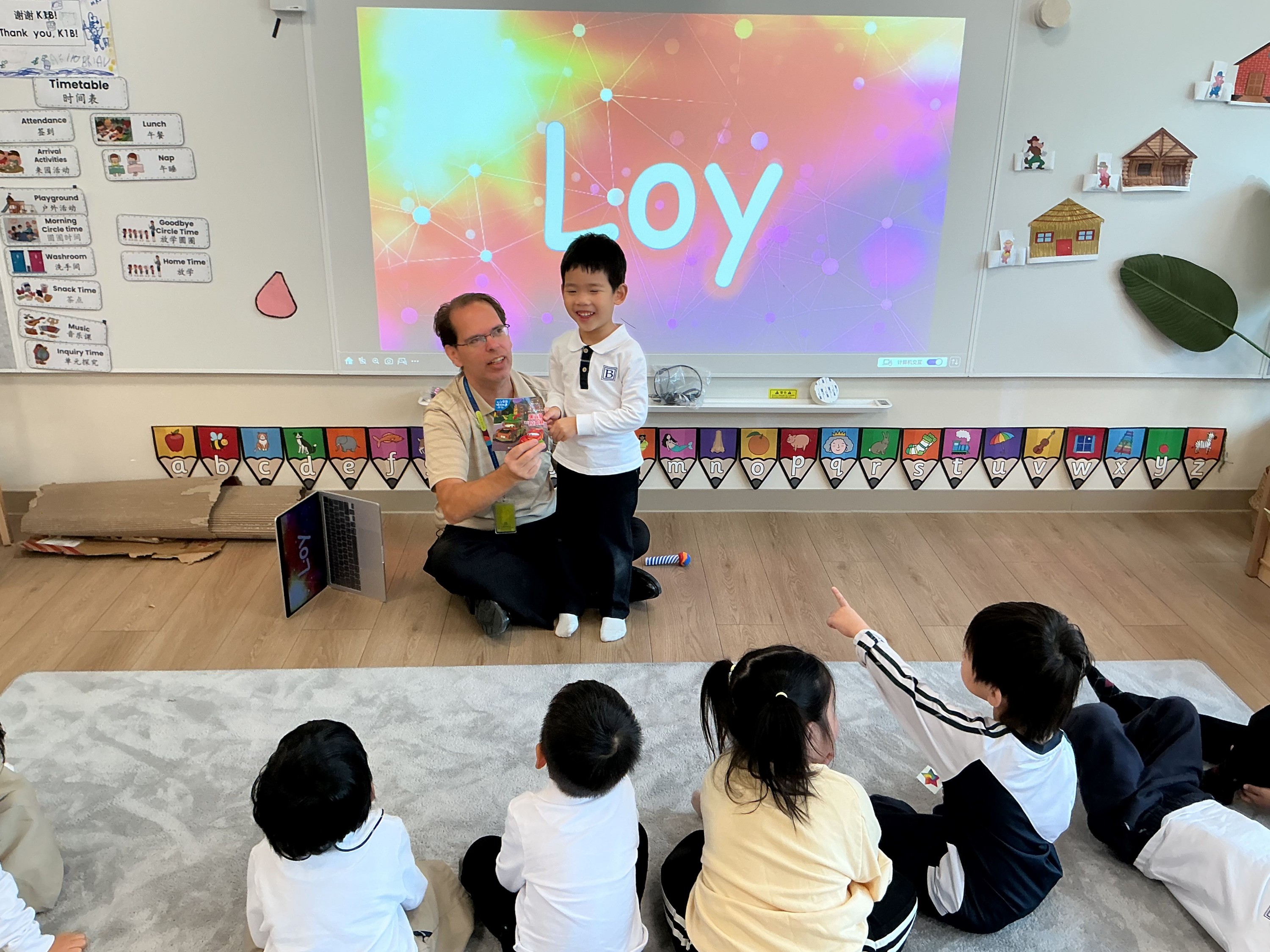
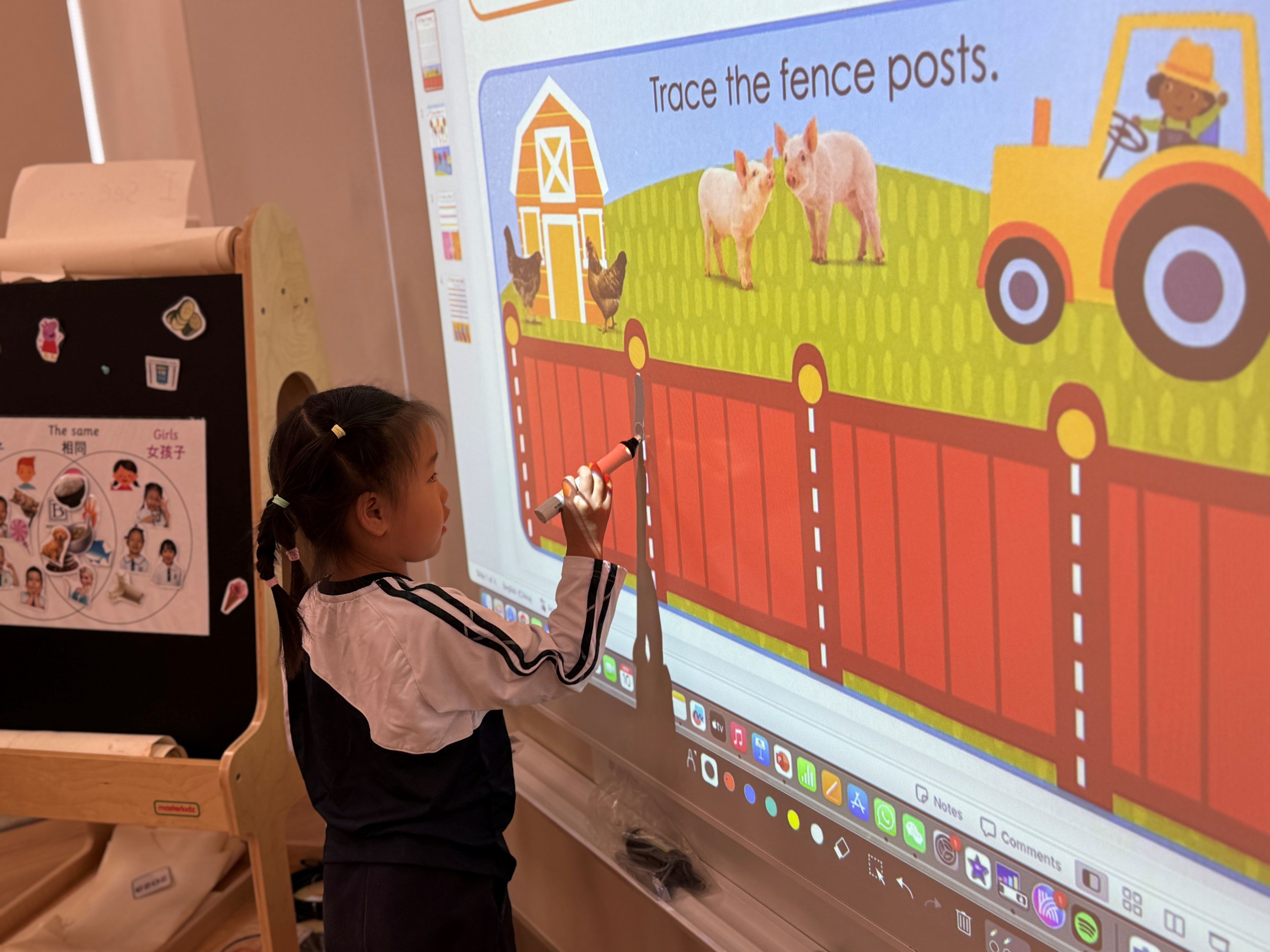
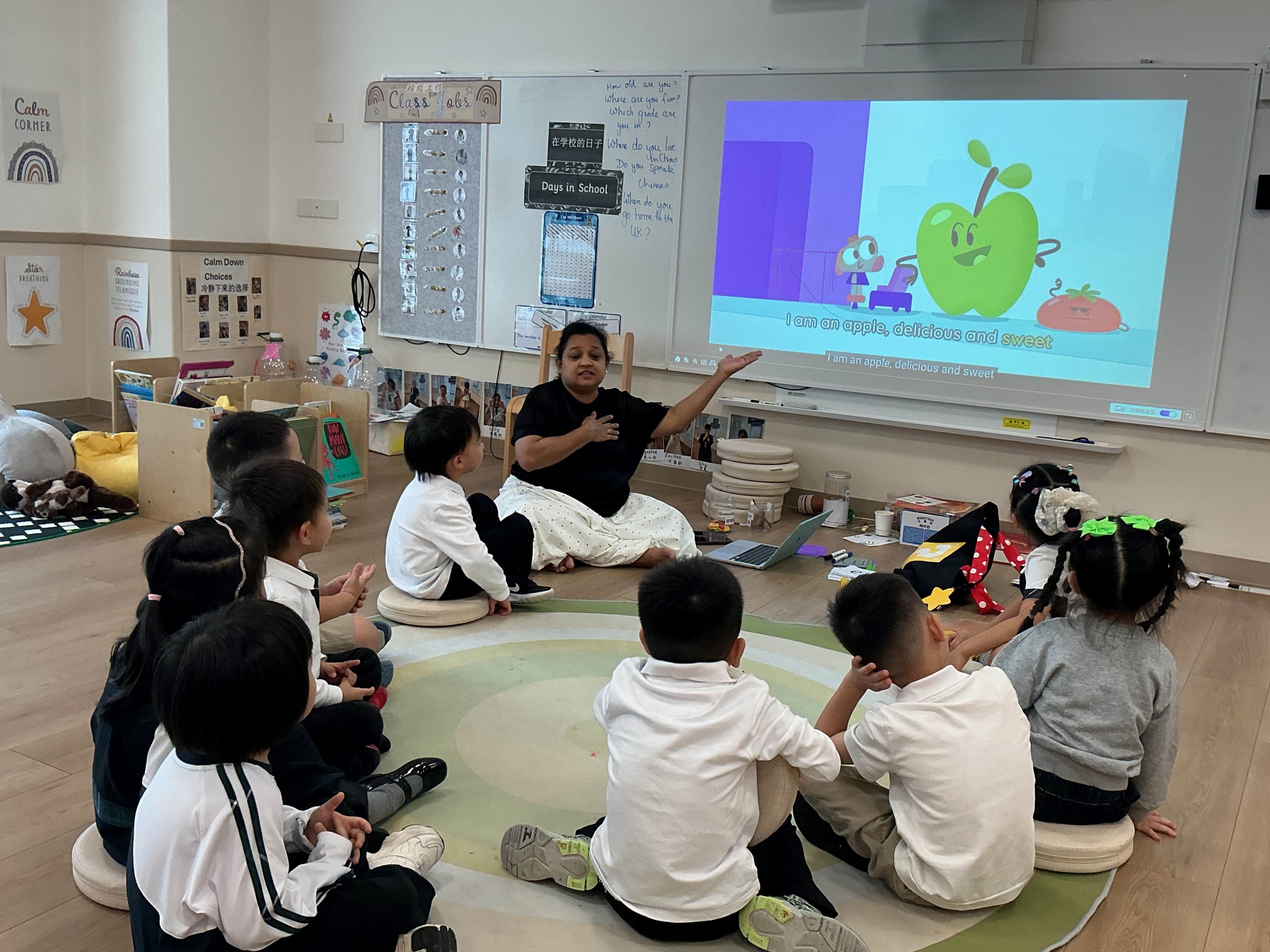
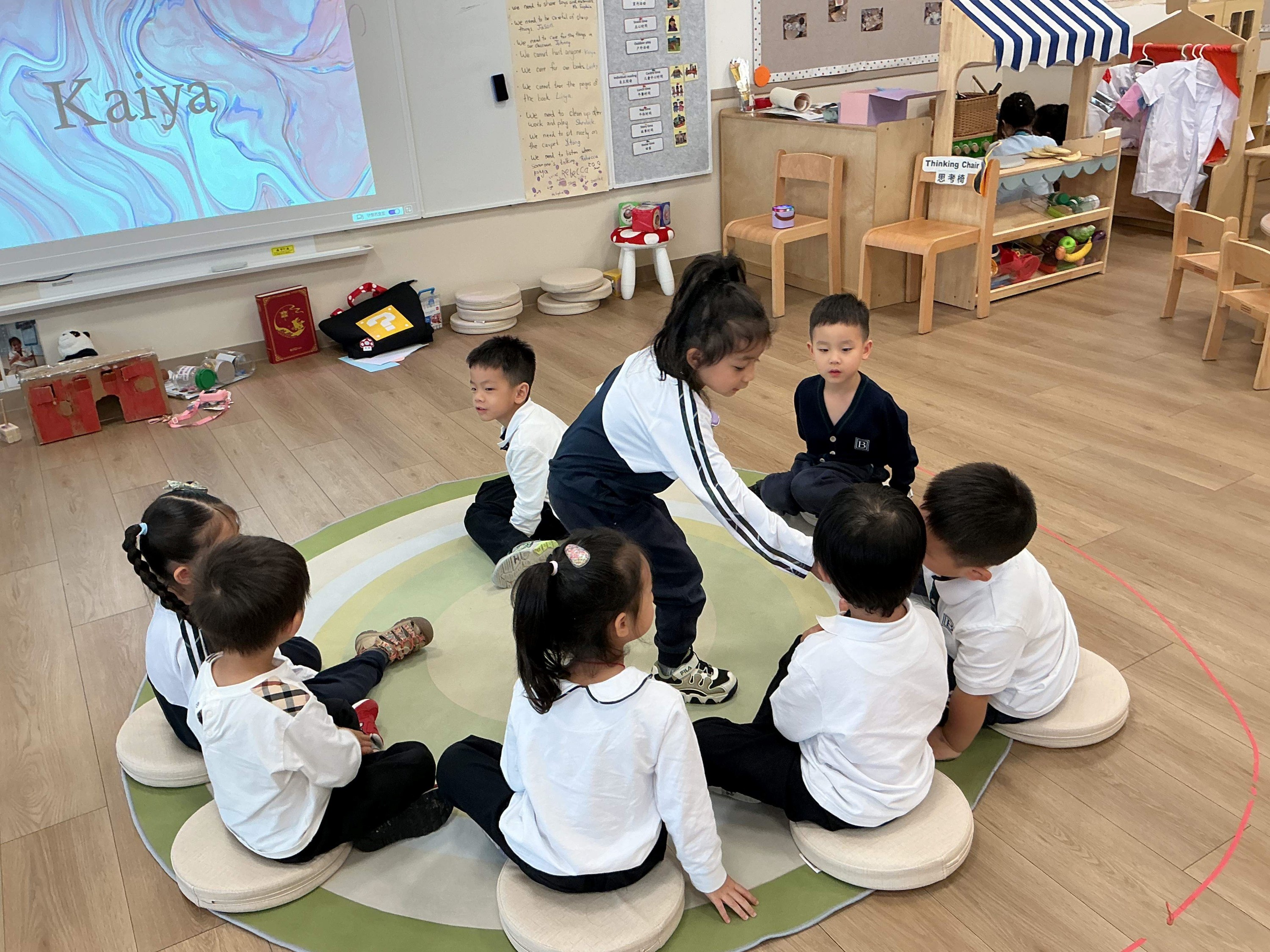
BKG places special emphasis on high quality English picture book reading as a core vehicle for immersive acquisition: each class has at least 10 leveled English reading picture books per child in the classroom, with regular rotations and updates. When combined with Chinese picture books, there are more than 30 books per child available in the classroom, providing a rich and exciting language environment for children to explore.
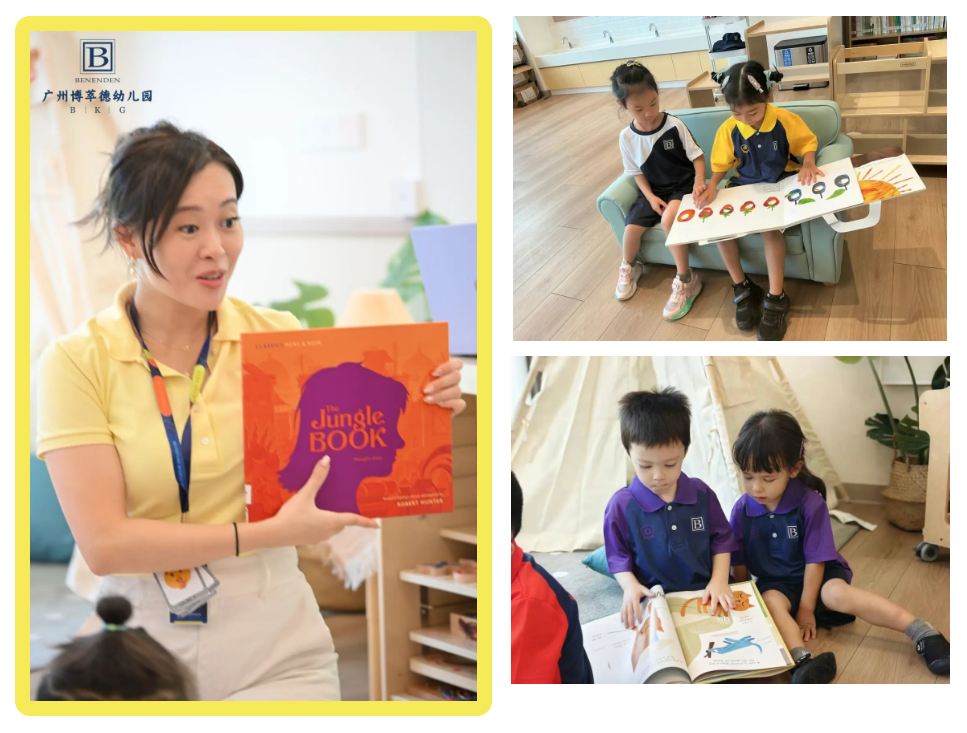
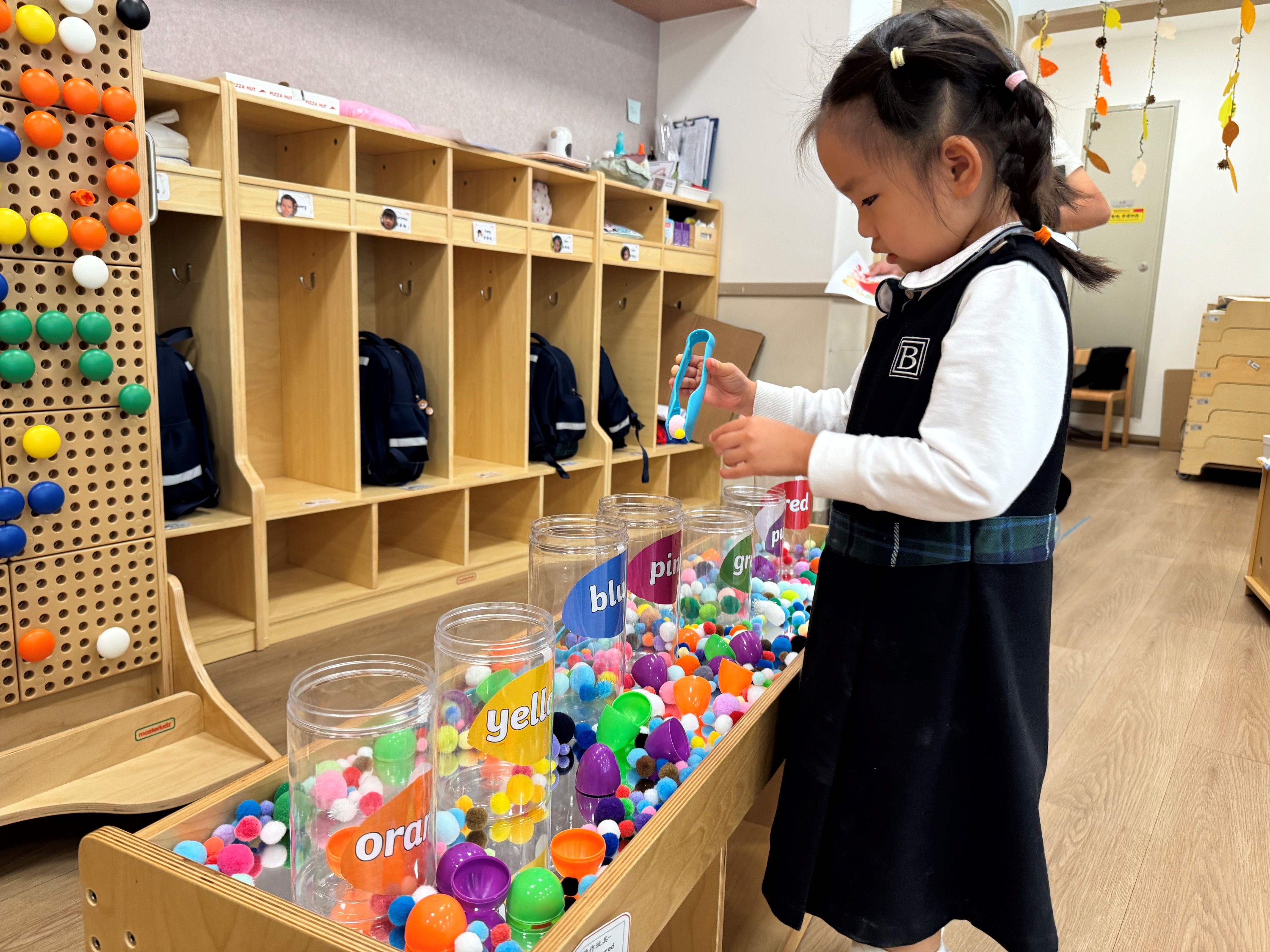
Most importantly, BKG leverages teaching across subjects to enrich children's English vocabulary in a multidisciplinary way. The whole language vocabulary system progresses in a spiral manner—deepening in content and increasing in difficulty—as children move to higher grades. Vocabulary is not only explored in daily life, but is reinforced and extended in various activities. Words related to colors, shapes, movements and textures are explored in art class, movements, the body and how it feels further extended in PE, with emotions and expression and how we move in space further extended in dramatic movement and play class. In music class, with words about rhythm, melody and timbre extended one again. So much is explored in a cross curricular way through and is stretched and extended week by week as children grow and learn.
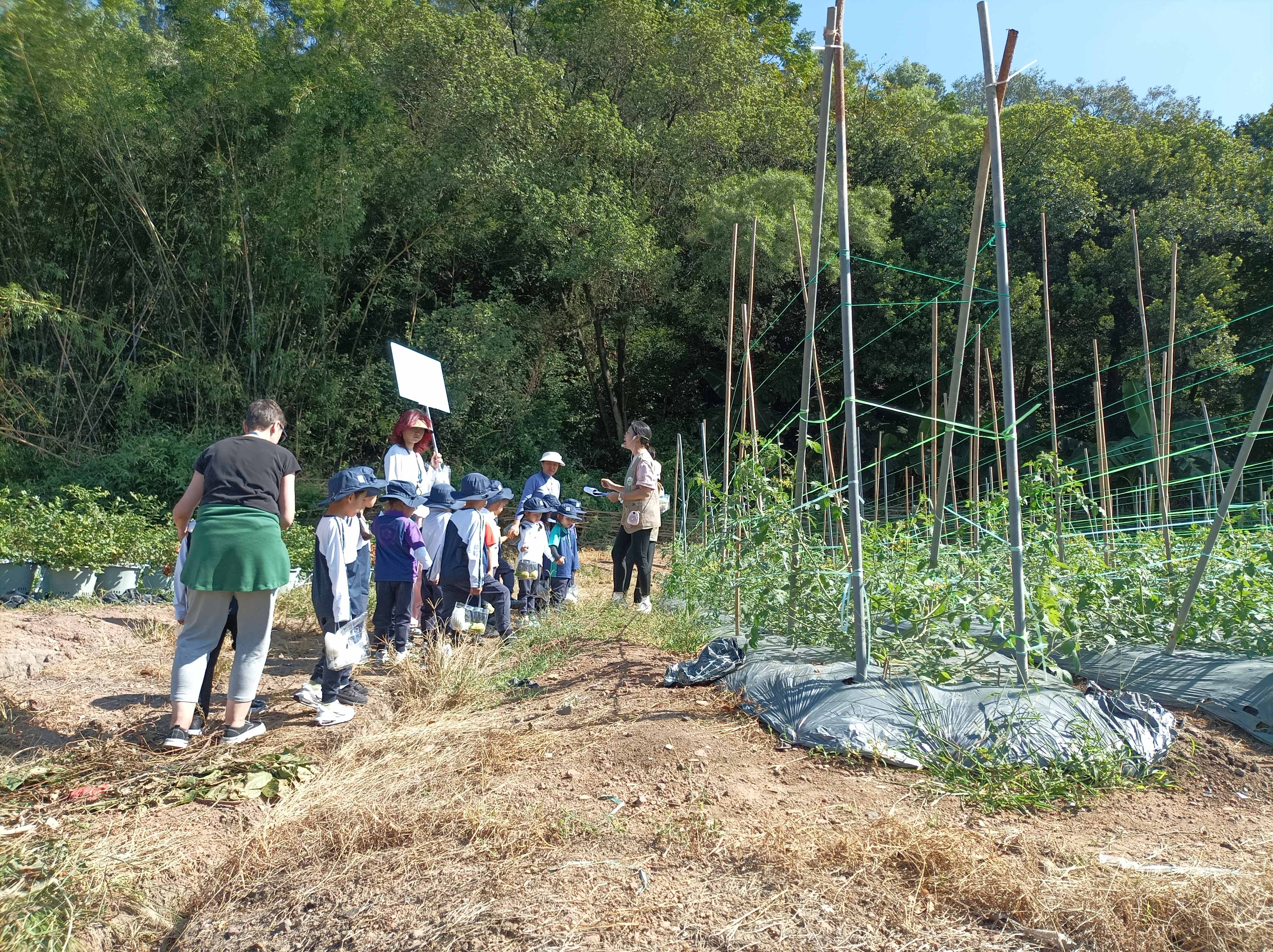
BKG adopts an inquiry-based teaching approach, centered on core themes such as "All About Me" - understanding myself and the time and space I live in." Children engage in learning and exploration across 7 curriculum areas— Communication, Language and Literacy, Cognitive Development - Mathematics, Cognitive Development – Science and Technology, Personal, Social and Emotional Development, Global, Cultural and Social Studies, Physical and Health Development and Creative Arts (including Music, Movement and Play and Visual Arts) . The inquiry topics, richness of English language use, and depth of critical thinking are enhanced in a "step-by-step progression" across different grade levels, ensuring that language abilities and cognitive development progess in tandem.
As our diverse community welcomes children from a variety of countries and backgrounds, English proficiency ranges from "native speakers" to "second-language learners" with a variety of levels in between. Therefore, teachers implement small group-based adapted teaching in class, matching learning tasks to each child’s proficiency level, ensuring everyone has the opportunity to grow.
Interactions with proficient English-speaking classmates fosters peer-to-peer language support—a key pillar of immersive acquisition. Children naturally self-correct their pronunciation and adjust their expression during real life conversations with peers and teachers alike, achieving implicit language improvement as they explore purposeful and meaningful communication.
Our outstanding team of international teachers from around the world, and bilingual Chinese teachers, serve as the primary source of authentic language exchange for children's English acquisition at BKG.
Amy also emphasizes that beyond the kindergarten's immersive language environment, family language support plays an irreplaceable role in synergizing children's language development. She points out that there is actually a positive transfer effect between children's native language development and English acquisition.
When parents put down their phones and engage in more parent-child conversations, storytelling, and picture book reading with their children, they enrich the child's vocabulary and language perception. This "foundation of native language accumulation" lays a solid and essential groundwork for English acquisition at kindergarten.
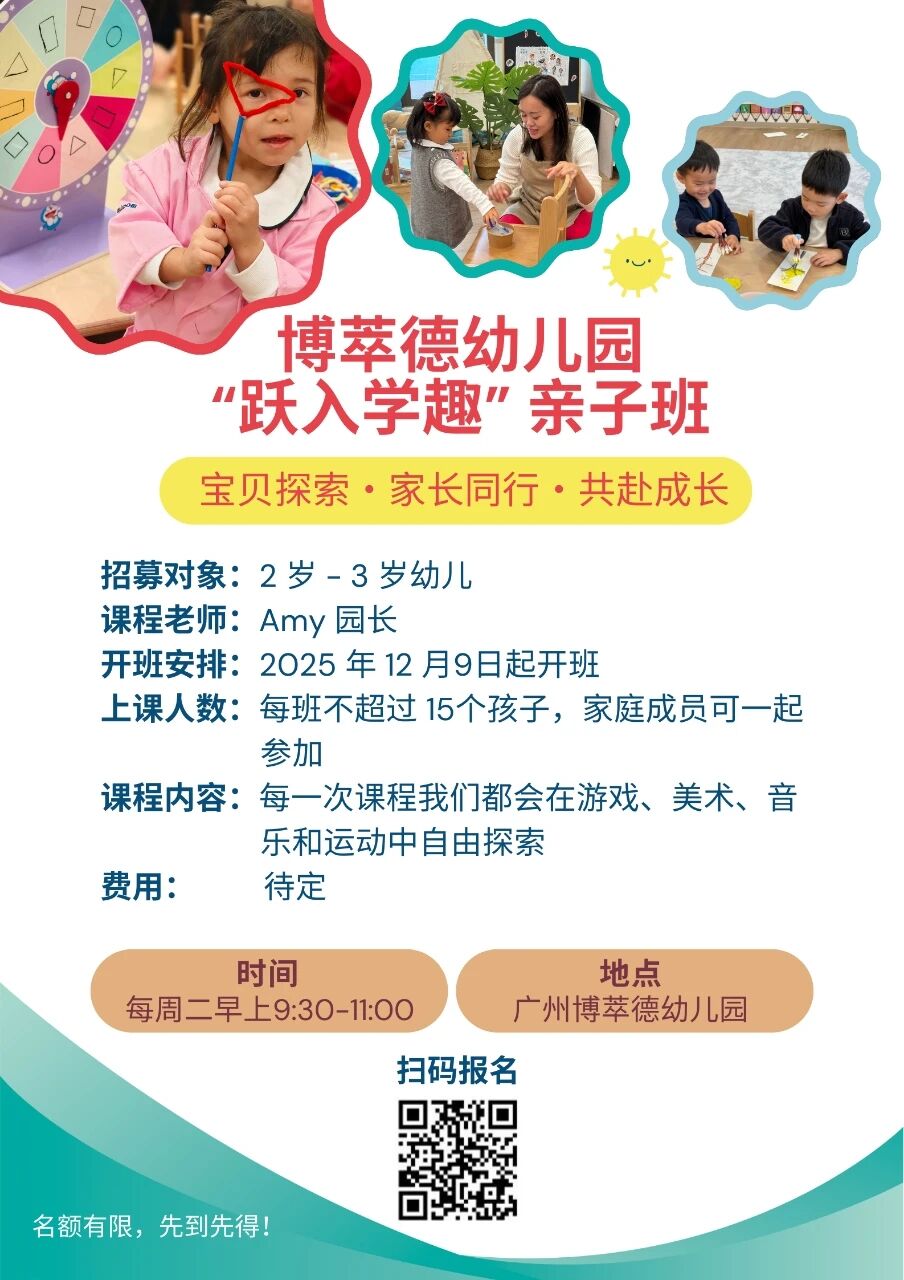
Sign up for the Playgroup to experience our immersive English learning environment.